
React Native Swag Styles
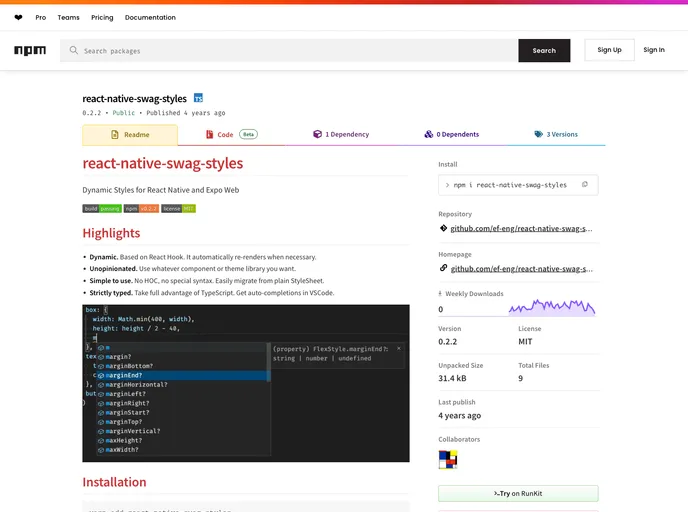


Dynamic Styles for React Native and Expo Web
Overview
React Native developers looking for a way to enhance their styling workflow should definitely check out react-native-swag-styles. This library provides a powerful yet simple way to create dynamic styles that seamlessly integrate with both React Native and Expo Web applications. By leveraging hooks and TypeScript, this tool makes it easy to manage styles in a type-safe manner, ensuring that your development experience is both efficient and enjoyable.
With its emphasis on flexibility, react-native-swag-styles allows you to utilize any component or theme library without being tied to a specific approach. It's a breath of fresh air for those who have faced limitations with traditional styling methods in React Native, making migrating from plain StyleSheet straightforward and intuitive.
Features
- Dynamic Styles: Automatically re-renders styles when necessary, thanks to React Hooks, ensuring your UI remains responsive to changes.
- Unopinionated: Freedom to use any component or theme library of your choice, allowing for greater flexibility in your projects.
- Simple to Use: Transitioning from traditional StyleSheet to makeStyles requires no special syntax or higher-order components (HOCs), making it easy to adapt.
- Strictly Typed: Fully compatible with TypeScript, enhancing your development experience with auto-completions in VSCode.
- Advanced Usage Options: Integrate a theming library by attaching the theme hook when creating styles, providing additional customization.
- Memoization Support: Ensures optimal performance by requiring that hook returns and props are plain (serializable) objects for proper memoization.
- createStyleSheet API: Extends the capabilities of StyleSheet.create to support constant values, further enhancing flexibility in styling.
- Comprehensive Documentation: An example folder showcases full working examples, including custom themes, making it easier for developers to understand and implement.
- React
React is a widely used JavaScript library for building user interfaces and single-page applications. It follows a component-based architecture and uses a virtual DOM to efficiently update and render UI components
- React Native
React Native is a framework for building mobile applications using React and JavaScript. It enables developers to write once and deploy to multiple platforms, including iOS, Android, and the web, while providing a native app-like experience to users.
- Templates & Themes

A template or theme refers to a pre-designed layout or structure that provides a basic framework for building a specific type of application or website. It typically includes good design, placeholder content and functional features, allowing developers to customize and fill in the details according to their specific needs.
- Eslint

ESLint is a linter for JavaScript that analyzes code to detect and report on potential problems and errors, as well as enforce consistent code style and best practices, helping developers to write cleaner, more maintainable code.
- Typescript

TypeScript is a superset of JavaScript, providing optional static typing, classes, interfaces, and other features that help developers write more maintainable and scalable code. TypeScript's static typing system can catch errors at compile-time, making it easier to build and maintain large applications.