
Spotify Web UI Clone
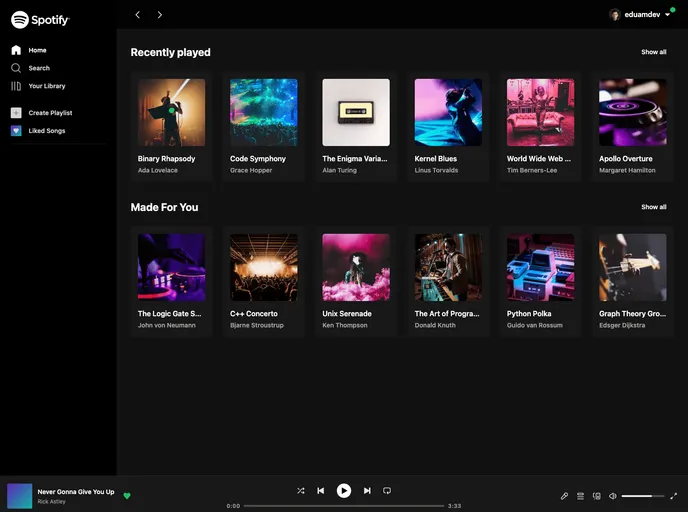


UI replica of the popular music streaming platform, created using Next.js, Tailwind CSS, and Radix UI.
Overview
Spotify Web UI is an impressive clone developed using a combination of modern web technologies. Built on the Next.js framework and styled with TailwindCSS, this project aims to replicate the familiar look and feel of the Spotify interface while ensuring a responsive and accessible user experience. The use of Radix UI and shadcn/ui for interactive components enhances usability, making it an excellent choice for developers looking to learn how to build complex web applications.
This clone not only allows users to experience the Spotify interface but also serves as a resource for understanding the integration of React, TailwindCSS, and various deployment tools like Vercel. With its focus on accessibility and reusability, the Spotify Web UI clone is a great starting point for anyone looking to deepen their knowledge of front-end development.
Features
- Next.js Framework: Utilizes Next.js for server-side rendering, providing faster load times and improved user experience.
- TailwindCSS Styling: Offers a utility-first CSS framework that allows for rapid design and customization of the UI.
- Radix UI: Incorporates interactive components from Radix UI, ensuring that elements are both accessible and easy to use.
- Shadcn/ui Components: Leverages reusable UI components to maintain consistency and streamline development.
- Responsive Design: Built with mobile-first principles, ensuring that the interface looks great on all device sizes.
- Vercel Deployment: Simplifies the deployment process, making it easy to host the application and share it with users.
- Modular Architecture: Encourages a clean code structure that's easy to navigate, making it ideal for collaboration and future enhancements.
- Real-time Interactivity: Emphasizes a seamless user experience with features that support dynamic content updates.
- Next.js
Next.js is a React-based web framework that enables server-side rendering, static site generation, and other powerful features for building modern web applications.
- React
React is a widely used JavaScript library for building user interfaces and single-page applications. It follows a component-based architecture and uses a virtual DOM to efficiently update and render UI components
- Tailwind
Tailwind CSS is a utility-first CSS framework that provides pre-defined classes for building responsive and customizable user interfaces.
- Radix UI
Radix Primitives is a low-level UI component library with a focus on accessibility, customization and developer experience. You can use these components either as the base layer of your design system, or adopt them incrementally.
- Postcss

PostCSS is a popular open-source tool that enables web developers to transform CSS styles with JavaScript plugins. It allows for efficient processing of CSS styles, from applying vendor prefixes to improving browser compatibility, ultimately resulting in cleaner, faster, and more maintainable code.
- Vercel

Vercel offers built-in support for deploying and hosting Next.js applications, making it a popular choice among Next.js developers.