
Nextjs Tailwind Contentlayer Blog Starter
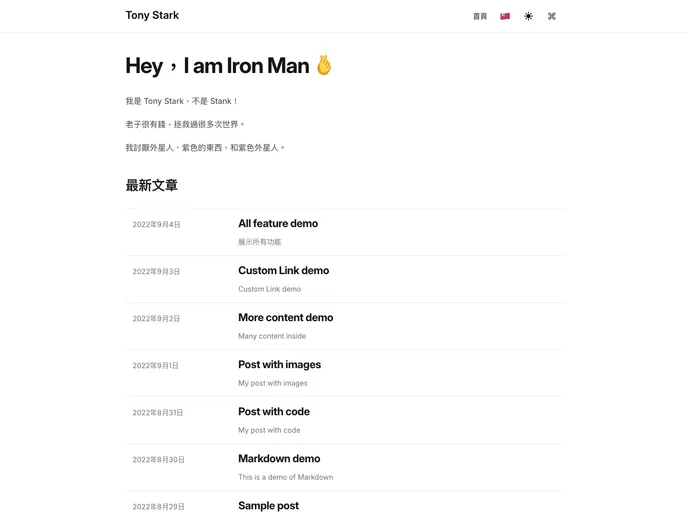




Blog starter template with modern frontend tech stack like Next.js, Tailwind CSS, Contentlayer, i18Next
Overview:
The Next.js Tailwind Contentlayer Blog Starter is an impressive template that simplifies the process of creating a modern blog with a powerful tech stack. It combines the advantages of Next.js, a popular React framework, with Tailwind CSS for styling and Contentlayer for seamless content management. Tailored for developers and content creators alike, this starter template provides an easy way to build a fast, SEO-friendly blog while maintaining an elegant and responsive design.
The starter template is inspired by the original work from timlrx/tailwind-nextjs-starter-blog, which has been modified to suit contemporary needs. Whether you are looking to launch a personal blog or manage a more complex content-driven site, this template puts you on the right path with its robust features and modern architecture.
Features:
- Writing with Markdown/MDX: Easily create and manage content using local Markdown and MDX files for flexible and rich formatting options.
- Blazing Fast Performance: Built on Next.js, this template guarantees optimizations for speed, ensuring a smooth user experience.
- SEO Friendly: Incorporates best practices for SEO, enhancing your blog's visibility on search engines with support from next-seo.
- Dark Mode: Automatically switch between light and dark themes, giving users the option to choose their preferred reading mode.
- Command Palette: Streamline navigation with a command palette, improving user experience and allowing for quick access to various functionalities.
- Comment System: Engage with your audience via an integrated comment system, fostering community interaction on your posts.
- Page Transition Progress Bar: Visual feedback with a progress bar during page transitions enhances user interaction and maintains engagement.
- RSS Feed & Sitemap: Helps in maintaining a structured outline of your content, making it easy for users and crawlers to navigate your blog efficiently.
- Next.js
Next.js is a React-based web framework that enables server-side rendering, static site generation, and other powerful features for building modern web applications.
- React
React is a widely used JavaScript library for building user interfaces and single-page applications. It follows a component-based architecture and uses a virtual DOM to efficiently update and render UI components
- SCSS
SCSS is a preprocessor scripting language that extends the capabilities of CSS by adding features such as variables, nesting, and mixins. It allows developers to write more efficient and maintainable CSS code, and helps to streamline the development process by reducing repetition and increasing reusability.
- Tailwind
Tailwind CSS is a utility-first CSS framework that provides pre-defined classes for building responsive and customizable user interfaces.
- Blog

Blog websites feature posts written by one or more authors, organized by categories and tags, with a section for comments and archives sorted by date or topic. Additional features may include search bar, social media sharing, subscription or RSS feed, about and contact pages, and visual content.
- Contentlayer

Contentlayer is an open-source platform for building dynamic, data-driven websites and applications using markdown files as the content source. It features an intuitive API, flexible content modeling, and easy integration with popular frontend frameworks and tools.
- Eslint

ESLint is a linter for JavaScript that analyzes code to detect and report on potential problems and errors, as well as enforce consistent code style and best practices, helping developers to write cleaner, more maintainable code.
- MDX

MDX is a format that allows developers to write JSX within Markdown documents, combining the power of React with the simplicity of Markdown. This allows for the creation of dynamic and interactive content that can be easily shared and consumed across different platforms and devices.
- Postcss

PostCSS is a popular open-source tool that enables web developers to transform CSS styles with JavaScript plugins. It allows for efficient processing of CSS styles, from applying vendor prefixes to improving browser compatibility, ultimately resulting in cleaner, faster, and more maintainable code.
- Typescript

TypeScript is a superset of JavaScript, providing optional static typing, classes, interfaces, and other features that help developers write more maintainable and scalable code. TypeScript's static typing system can catch errors at compile-time, making it easier to build and maintain large applications.
- Vercel

Vercel offers built-in support for deploying and hosting Next.js applications, making it a popular choice among Next.js developers.