
Ngx Tree
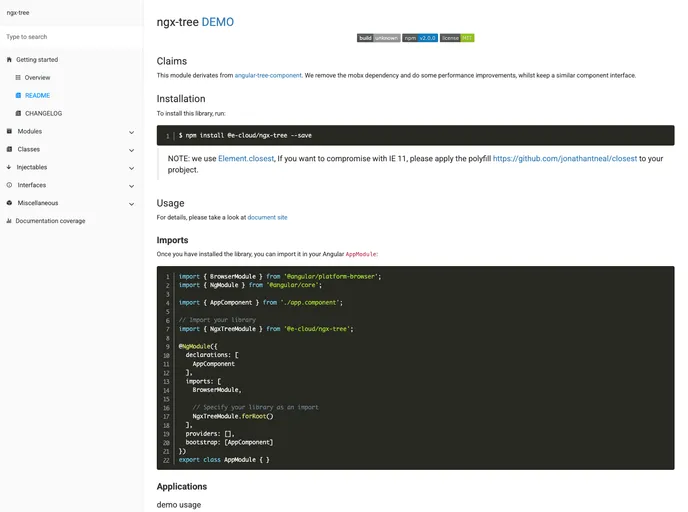

A derived version of angular-tree-component without mobx, better performance.
Overview
Ngx-tree is an efficient module that builds upon the existing angular-tree-component, enhancing performance while removing MobX dependencies. This library provides a familiar component interface that allows developers to implement tree structures seamlessly in their Angular applications. With its robust features and customization options, ngx-tree is an excellent choice for anyone looking to manage tree data efficiently.
Features
-
Performance Improvements: Designed for speed, ngx-tree optimizes tree structure rendering, providing a smoother user experience without the overhead of MobX.
-
Easy Installation: Installing the library is straightforward, allowing developers to integrate it into their Angular projects quickly.
-
Customizable Templates: Includes predefined templates such as loading, expander, and full customization options for tree nodes, offering flexibility in the presentation of tree data.
-
Tree Options Categorization: Splits tree options into TreeDataOptions and TreeUIOptions, ensuring that data operations and UI configurations are managed effectively and efficiently.
-
Root Module Integration: Features a
forRoot()method that injects necessary providers, streamlining the setup process for root modules in applications. -
Support for Asynchronous Data: The loading indicator template allows for better handling of async nodes, enhancing user feedback during data operations.
-
Full Customization Support: Offers multiple levels of customization for tree node contents and their interactions, catering to diverse project requirements.
Ngx-tree stands out as a powerful tool for developers seeking a reliable and flexible solution for managing hierarchical data in Angular applications.
- Angular
Angular is a TypeScript-based open-source framework by Google for building dynamic single-page applications and cross-platform mobile apps with MVC architecture and a rich set of features.
- Typescript

TypeScript is a superset of JavaScript, providing optional static typing, classes, interfaces, and other features that help developers write more maintainable and scalable code. TypeScript's static typing system can catch errors at compile-time, making it easier to build and maintain large applications.