
Djacket
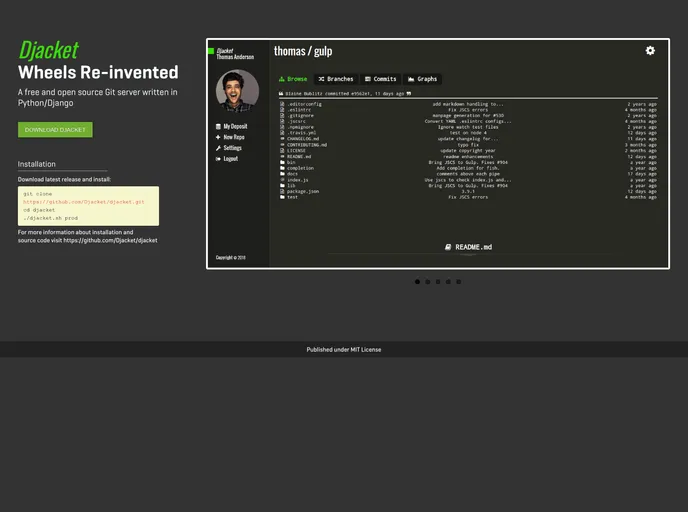
A free and open source Git server written in Python/Django. Lightweight and useful.
Overview
Djacket is an impressive open-source Git server designed with simplicity and efficiency in mind. Built using Python and Django, it offers a lightweight solution for those who need a reliable platform to manage their Git repositories. The latest version, 0.2.1, introduces enhancements that streamline the user experience and continue to maintain its status as an accessible tool for developers.
Getting started with Djacket is user-friendly, thanks to its containerization via Docker. This development means that setting it up and running it in a production environment is more straightforward than ever, making it an appealing choice for both seasoned developers and newcomers alike.
Features
-
Open Source: Djacket is entirely free to use, and its open-source nature encourages community contributions and transparency.
-
Dockerized: The current version is optimized for Docker, simplifying installation and management tasks, allowing you to focus on development.
-
Automatic Superuser Creation: On initial setup, Djacket automatically creates a superuser, making it easier for you to manage your platform without needing to set up permissions manually.
-
Comprehensive Documentation: Detailed documentation ensures that users can easily navigate through installation, setup, and best practices for utilizing Djacket effectively.
-
Easy Updates: Updating the server is a hassle-free process; simply running a git pull command is all it takes to keep your setup current.
-
Logs Management: The system efficiently handles logging, with NGINX and Gunicorn logs stored separately for troubleshooting and performance monitoring.
-
Community Support: Users can report issues or seek assistance through GitHub, fostering a collaborative environment that enhances the use of the software.
-
MIT License: The software is released under the MIT license, permitting flexible usage and modification, making it suitable for various projects and environments.
- Django
Django is a high-level Python web framework that encourages rapid development and clean, pragmatic design. It follows the model-view-controller (MVC) architectural pattern, providing an extensive set of built-in tools and conventions to streamline the creation of robust and scalable web applications.
- Docker

A website that uses Docker for containerization to streamline development, testing, and deployment workflows. This includes features such as containerization of dependencies, automated builds and deployments, and container orchestration to ensure scalability and availability.
- Gulp

Gulp.js is an old but popular site building tool that automates various repetitive development tasks in web development, such as compiling Sass, minifying JavaScript, and optimizing images.