
Dj Stripe
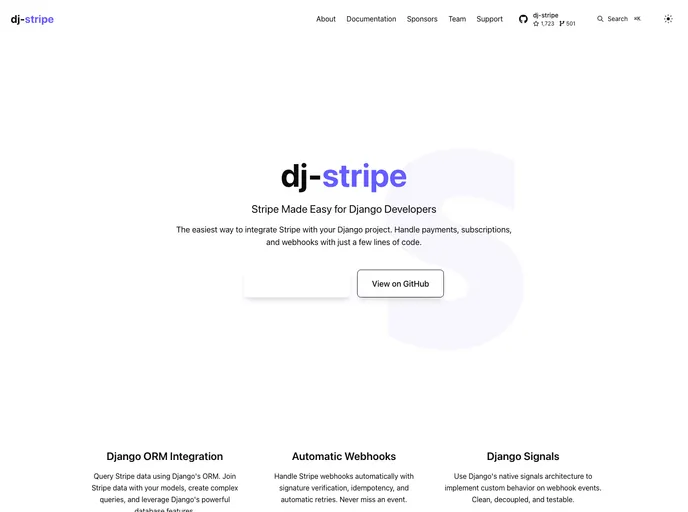

dj-stripe automatically syncs your Stripe Data to your local database as pre-implemented Django Models allowing you to use the Django ORM, in your code, to work with the data making it easier and faster.
Overview
Dj Stripe is an innovative solution that simplifies the way you manage Stripe data within your Django applications. By automatically syncing your Stripe data to your local database with pre-implemented Django Models, it streamlines the development process, allowing developers to utilize the Django ORM effortlessly. This integration provides a seamless experience for handling payment data, reducing the complexity of interactions between your application and Stripe’s API.
With Dj Stripe, developers can focus on building robust features without the hassle of dealing with manual API calls. This integration aims to enhance productivity while ensuring that your payment systems are efficiently managed and up-to-date.
Features
- Automatic Data Sync: Dj Stripe automates the process of syncing your Stripe data to your local database, ensuring you always have the latest information available.
- Pre-Implemented Django Models: It comes with pre-built Django Models that represent Stripe objects, making it easy to use and integrate into existing projects.
- Django ORM Compatibility: The seamless integration with Django's Object-Relational Mapping (ORM) allows for intuitive data manipulation using familiar query methods.
- Improved Development Speed: By eliminating the need for repetitive API calls, developers can focus on writing and enhancing application features faster than before.
- Robust Payment Management: Dj Stripe enables better management of payment workflows by providing a solid foundation for handling various Stripe transactions.
- Customizable and Extensible: The solution can be easily customized and extended to meet specific application requirements, ensuring flexibility in development.
- Django
Django is a high-level Python web framework that encourages rapid development and clean, pragmatic design. It follows the model-view-controller (MVC) architectural pattern, providing an extensive set of built-in tools and conventions to streamline the creation of robust and scalable web applications.