
Personal Site
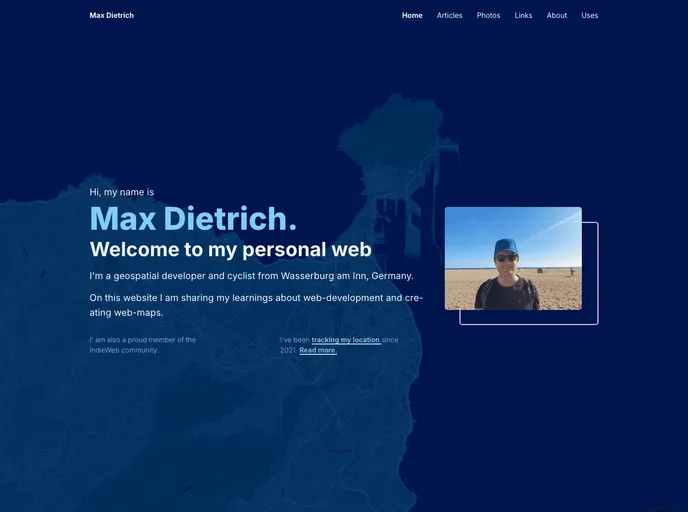




Personal website built with Next.JS and Strapi
Overview:
This product analysis is about the site repo of mxd.codes. The site is built using the React framework Next.js for the frontend, while the backend consists of a CMS called Strapi and Postgres for content management, Matomo for collecting anonymized traffic data, and Nginx for the web server. The repo is licensed under the MIT License and allows forking and using individual pieces of code while giving proper credit to mxd.codes. It is important to note that the site uses images mainly from Unsplash, ESA, and Pixabay.
Features:
- Frontend built with the React framework Next.js
- Backend CMS: Strapi for content management
- Analytics: Matomo for collecting anonymized traffic data
- Web-Server: VPS with Nginx
- Repo licensed under the MIT License
- Allows forking and using individual pieces of code with proper credit
- Uses images from Unsplash, ESA, and Pixabay
Summary:
The mxd.codes site repo is a combination of frontend and backend technologies to build a website. It utilizes the React framework Next.js for the frontend, Strapi as the CMS for content management, Matomo for collecting anonymized traffic data, and Nginx as the web server. The repo is licensed under the MIT License and allows forking and use of individual code pieces. It is recommended to give credit back to mxd.codes when utilizing the code. The site uses images mainly from Unsplash, ESA, and Pixabay.
- Next.js
Next.js is a React-based web framework that enables server-side rendering, static site generation, and other powerful features for building modern web applications.
- React
React is a widely used JavaScript library for building user interfaces and single-page applications. It follows a component-based architecture and uses a virtual DOM to efficiently update and render UI components
- Styled Components
Styled Components is a popular library for styling React components using CSS syntax. It allows you to write CSS in your JavaScript code, making it easier to create dynamic styles that are specific to each component.
- Prisma
Prisma is a server-side library that helps developers read and write data to the database in an intuitive, efficient and safe way.
- Strapi
Strapi is an open source headless CMS that provides a customizable content management system and API for your projects. It allows you to manage content in a visual interface and use a REST or GraphQL API to retrieve the data.
- Eslint

ESLint is a linter for JavaScript that analyzes code to detect and report on potential problems and errors, as well as enforce consistent code style and best practices, helping developers to write cleaner, more maintainable code.
- Graphql
A website that uses GraphQL as a query language to manage data fetching and state management. This includes features such as a strongly typed schema, client-side caching, and declarative data fetching to streamline data management and optimize website performance.
- Prism JS

PrismJS is an open-source, lightweight, and extensible syntax highlighting library that supports a wide range of programming languages and markup formats.
- Typescript

TypeScript is a superset of JavaScript, providing optional static typing, classes, interfaces, and other features that help developers write more maintainable and scalable code. TypeScript's static typing system can catch errors at compile-time, making it easier to build and maintain large applications.