
Ng Shopping Cart
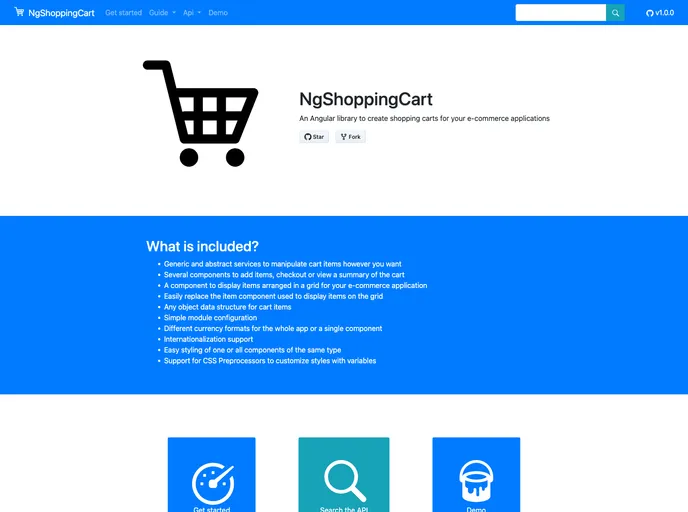


An Angular component library to create shopping carts
Overview
Creating an engaging e-commerce experience requires robust tools to manage cart functionality seamlessly, and that’s exactly where this Angular library shines. With its versatile features, developers can easily manipulate cart items, implement various checkout processes, and present item summaries, making it an excellent addition for anyone developing an online store. The library is built with flexibility and customization in mind, ensuring that it can adapt to different project needs.
This library not only simplifies cart management but also offers compatibility with various Angular versions (>=5), making it accessible for a broad range of projects. With its internationalization support and customizable styling options, developers can create a user-friendly experience that caters to diverse audiences.
Features
- Generic and Abstract Services: Manipulate cart items in any way you choose, allowing for extensive flexibility in functionality.
- Multiple Components: Include components to add items, complete checkouts, or view a summary of the cart easily.
- Grid Display for Items: Showcase items arranged in a grid format to enhance the visual appeal of your e-commerce application.
- Customizable Item Component: Effortlessly replace the item display component with a design that suits your application’s style.
- Versatile Data Structure: Support for any object data structure for cart items, making it adaptable for various types of products.
- Simple Module Configuration: Quick and easy configuration process allows developers to get started without extensive setup.
- Internationalization Support: Easily implement different currency formats for the whole application or specific components.
- CSS Preprocessors Compatibility: Support for CSS preprocessors enables customization of styles using variables for a more tailored design.
- Angular
Angular is a TypeScript-based open-source framework by Google for building dynamic single-page applications and cross-platform mobile apps with MVC architecture and a rich set of features.
- Bootstrap
Bootstrap is the most popular CSS Framework for developing responsive and mobile-first websites.
- Ecommerce

Ecommerce websites sell products or services to customers through an online storefront. These websites typically include features such as product listings, shopping carts, payment processing, and order management tools.
- Eslint

ESLint is a linter for JavaScript that analyzes code to detect and report on potential problems and errors, as well as enforce consistent code style and best practices, helping developers to write cleaner, more maintainable code.
- Gulp

Gulp.js is an old but popular site building tool that automates various repetitive development tasks in web development, such as compiling Sass, minifying JavaScript, and optimizing images.
- Prism JS

PrismJS is an open-source, lightweight, and extensible syntax highlighting library that supports a wide range of programming languages and markup formats.
- Typescript

TypeScript is a superset of JavaScript, providing optional static typing, classes, interfaces, and other features that help developers write more maintainable and scalable code. TypeScript's static typing system can catch errors at compile-time, making it easier to build and maintain large applications.