
React Call
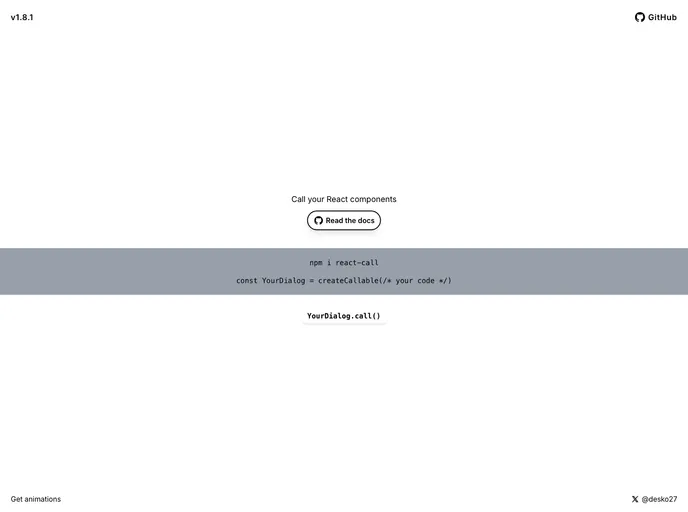

Call your React components
Overview
Calling React components has never been easier with this innovative tool that simplifies user interactions. It allows developers to present a wide variety of user interfaces—ranging from confirmations and notifications to modals and context menus—while managing responses with a straightforward approach. This flexibility helps in crafting seamless user experiences without breaking a sweat.
The setup process is intuitive and quick, empowering you to use any React component as a callable interface. With features enabling enhanced functionality and responsiveness, this tool is a game-changer for React developers looking to streamline their code.
Features
-
Simple Usage: Calling components is as easy as using
window.confirm(), making it accessible for developers of all skill levels. -
Versatile Applications: Create confirmations, dialogs, notifications, toasts, popups, and more—all tailored for your project needs.
-
Quick Setup: By setting up a special
<Root>and utilizing props effectively, you can have your components callable in no time. -
Promise-Based Management: Leverage promises to control the flow—end calls or update props dynamically as needed.
-
Upsert Functionality: Use
upsert()to ensure a single instance of a component is active, ideal for managing notifications or preventing duplicates. -
Exit Animations: Animate the exit of your components by specifying the animation duration in milliseconds for smoother transitions.
-
Root Props Management: Easily pass data via the Root component, enhancing your component's capabilities and consistency across calls.
-
Call Stack Handling: Manage multiple calls gracefully with a call stack approach, ensuring orderly UI presentation without conflicts.
- React
React is a widely used JavaScript library for building user interfaces and single-page applications. It follows a component-based architecture and uses a virtual DOM to efficiently update and render UI components
- Typescript

TypeScript is a superset of JavaScript, providing optional static typing, classes, interfaces, and other features that help developers write more maintainable and scalable code. TypeScript's static typing system can catch errors at compile-time, making it easier to build and maintain large applications.