
Angular Rxjs Child
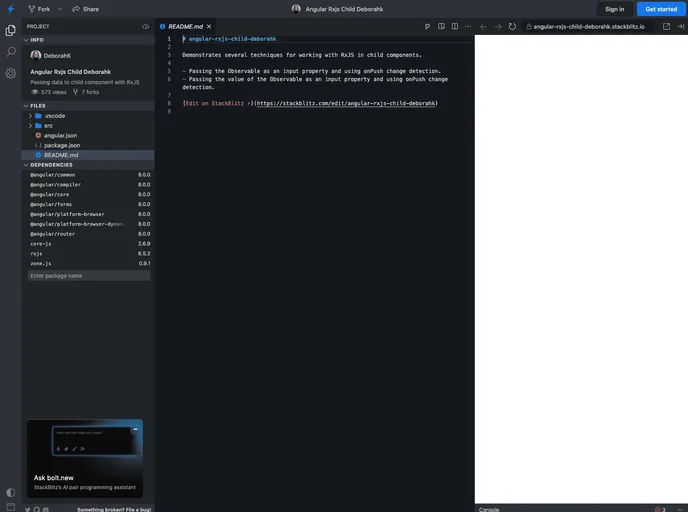
Several techniques of working with RxJS in child components. Created with StackBlitz
Overview
The Angular RxJS Child demonstration by Deborah K provides a comprehensive insight into handling reactive programming within Angular child components. It illustrates various techniques that enhance performance and improve data flow in component interactions. By utilizing RxJS, developers can create more dynamic and responsive applications that ensure efficient change detection and state management.
Features
- Observable Input Properties: Pass Observables directly as input properties to child components for sleek data handling and reduced complexity.
- OnPush Change Detection: Leverage the OnPush change detection strategy for optimizing performance by only checking when inputs change.
- Value Passing: Transform and pass the value of an Observable as input, simplifying usage in child components while maintaining reactive capabilities.
- Hands-on Example: Accessible code snippets that make it easy to understand and implement these techniques in real projects.
- Scalability: Ensures that the application can scale seamlessly as RxJS promotes a unidirectional data flow, making it robust for larger applications.
- Improved Performance: By employing these methods, developers can achieve better rendering performance and responsiveness in their Angular applications.
- Typescript

TypeScript is a superset of JavaScript, providing optional static typing, classes, interfaces, and other features that help developers write more maintainable and scalable code. TypeScript's static typing system can catch errors at compile-time, making it easier to build and maintain large applications.