
Schools
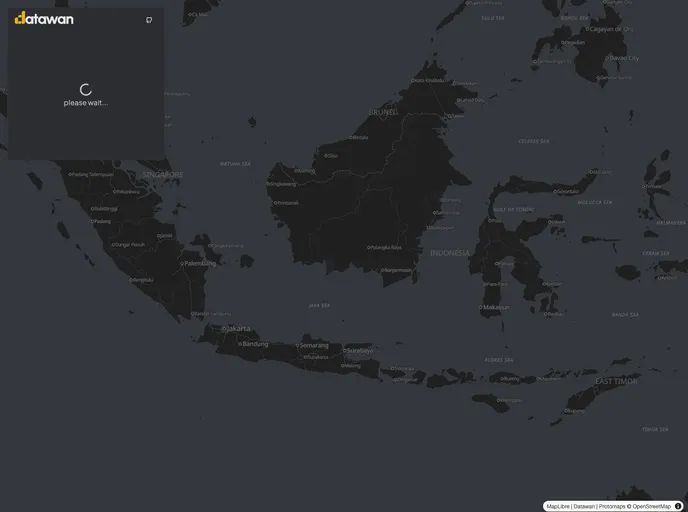



Visualizing School Distribution and Population Density in Indonesia, By mapping where people live alongside school locations, this study shows how spatial data can reveal patterns of educational access across the country.
Overview:
The project by Datawan Labs aims to visualize school distribution and population density across Indonesia, offering insights into educational accessibility. Given Indonesia's diverse geography, ensuring that schools are evenly accessible is a challenge. This study employs spatial data to illustrate the correlation between population locations and school placements, creating a comprehensive overview of educational reach at the community level. Such visualizations serve not just as tools for understanding existing accessibility but also as foundations for addressing gaps in educational services.
In this innovative endeavor, the emphasis is placed on crafting interactive big data visualizations that are both performance-efficient and user-friendly. The project leverages unique data handling strategies to minimize resource usage while maximizing interactivity, making it a noteworthy example of how technology can be effectively utilized to analyze and present critical information.
Features:
-
Interactive Visualizations: Offers dynamic, engaging visual representations of data that allow users to explore school distribution across Indonesia.
-
Efficient Data Management: Utilizes Parquet file format, which compresses data efficiently, leading to significantly reduced file sizes compared to traditional formats like JSON or CSV.
-
Partial Data Querying: By using duckdb-wasm, the project supports querying only the needed parts of large datasets, which optimizes data transfer and processing time.
-
Large Datasets Handling: Manages extensive datasets effectively, including over 475,000 rows of school data and 573,000 rows of population data.
-
Performance-Driven Choices: The project avoids heavy database management systems, opting instead for static data handling for improved performance and lower resource consumption.
-
Future Readiness: Designed with flexibility in mind, the architecture allows for easy updates and adaptation to new datasets or visualization needs.
-
Clear Educational Insights: The visualizations aim to deliver insights that foster discussions and strategies on improving educational access in underserved areas.
- Solid
SolidJS is a declarative JavaScript library for building user interfaces, offering a reactive programming model for efficient updates. It stands out for its reactivity system that minimizes unnecessary re-renders and its small bundle size, making it a performant choice for developing lightweight and reactive web applications.
- Tailwind
Tailwind CSS is a utility-first CSS framework that provides pre-defined classes for building responsive and customizable user interfaces.
- Kobalte
Kobalte is an accessible component library for SolidJS that provides unstyled, fully accessible UI primitives. It follows WAI-ARIA design patterns and offers a solid foundation for building custom design systems with SolidJS.
- Postcss

PostCSS is a popular open-source tool that enables web developers to transform CSS styles with JavaScript plugins. It allows for efficient processing of CSS styles, from applying vendor prefixes to improving browser compatibility, ultimately resulting in cleaner, faster, and more maintainable code.