
Django Webhook
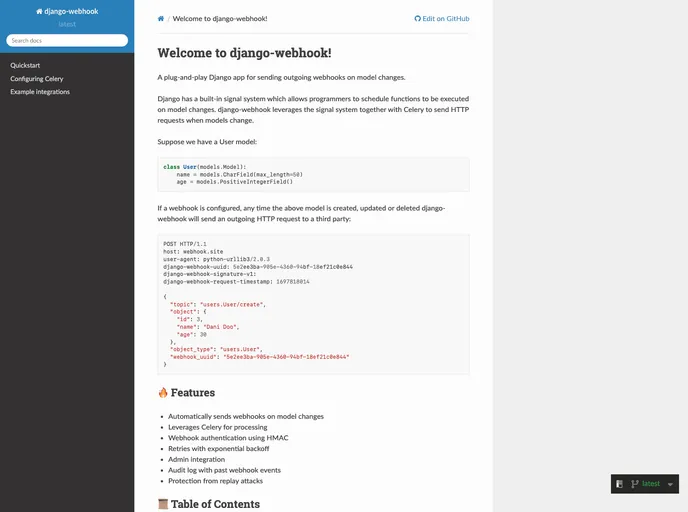

Django webhooks triggered on model changes
Overview
Django Webhook is an innovative tool designed to streamline how web applications communicate with each other. By triggering webhooks upon model changes, it ensures that your application can easily integrate with other systems and respond in real-time to changes in your data. This functionality is especially useful for developers looking to enhance their applications with notification systems, data synchronization, and other automated processes.
Features
- Real-time Communication: Instantly sends notifications when model changes occur, ensuring that other systems are always updated with the latest information.
- Customizable Payloads: Allows developers to define the metadata and structure of the webhook payload to meet the specific needs of their applications.
- Easy Integration: Simple setup process to seamlessly integrate with existing Django applications without the need for extensive configuration.
- Support for Multiple Events: Configurable to listen to different model events (create, update, delete), providing flexibility in how your application responds to changes.
- Retry Mechanism: Automatically retries failed webhook calls to ensure data consistency and reliability in communication.
- Logging and Monitoring: Features built-in logging capabilities to monitor webhook activity, making it easier to debug and understand system interactions.
- Security Options: Provides various security features to safeguard the integrity of the webhook communication, including token-based authentication.
- Django
Django is a high-level Python web framework that encourages rapid development and clean, pragmatic design. It follows the model-view-controller (MVC) architectural pattern, providing an extensive set of built-in tools and conventions to streamline the creation of robust and scalable web applications.