
Jikji
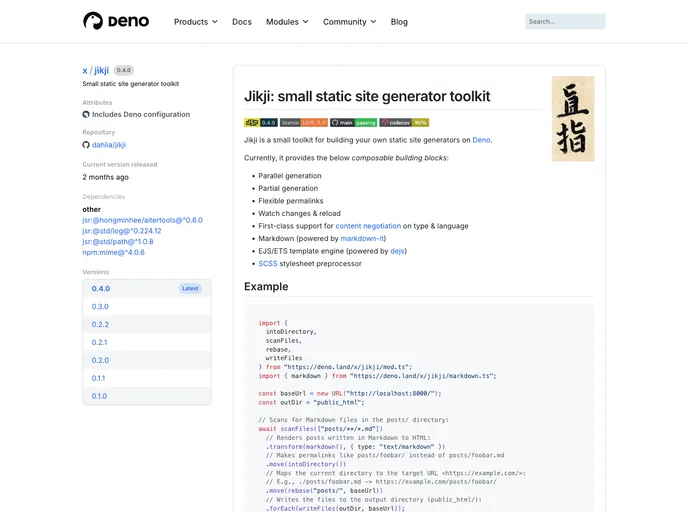
Small static site generator toolkit
Overview
Jikji is a small toolkit for building static site generators on Deno. It provides various building blocks, including parallel generation, partial generation, flexible permalinks, and content negotiation. With Jikji, users can easily create their own static site generators.
Features
- Parallel generation: Jikji allows users to generate their static site in parallel, improving the speed of site generation.
- Partial generation: Users can choose to generate only specific parts of their site, saving time and resources.
- Flexible permalinks: Jikji supports customizable permalinks, allowing users to define the structure of their site's URLs.
- Watch changes & reload: Users can enable the watch mode in Jikji, which will automatically detect changes in the source files and reload the site accordingly.
- First-class support for content negotiation on type & language: Jikji provides comprehensive support for content negotiation, allowing users to customize the representation of their resources based on content type and language.
- Markdown support: Jikji is powered by markdown-it, a popular markdown parser, allowing users to write content in markdown format.
- EJS/ETS template engine: Jikji supports the EJS/ETS template engine, enabling users to build dynamic templates for their site.
- SCSS stylesheet preprocessor: Jikji is integrated with the grass SCSS preprocessor, making it easy to write and compile SCSS stylesheets.
Summary
Jikji is a versatile toolkit for building static site generators on Deno. It offers features like parallel generation, partial generation, flexible permalinks, and content negotiation. By providing support for popular technologies like markdown, EJS/ETS templates, and SCSS stylesheets, Jikji empowers users to create dynamic and customizable static sites.
- Typescript

TypeScript is a superset of JavaScript, providing optional static typing, classes, interfaces, and other features that help developers write more maintainable and scalable code. TypeScript's static typing system can catch errors at compile-time, making it easier to build and maintain large applications.