
Atlas
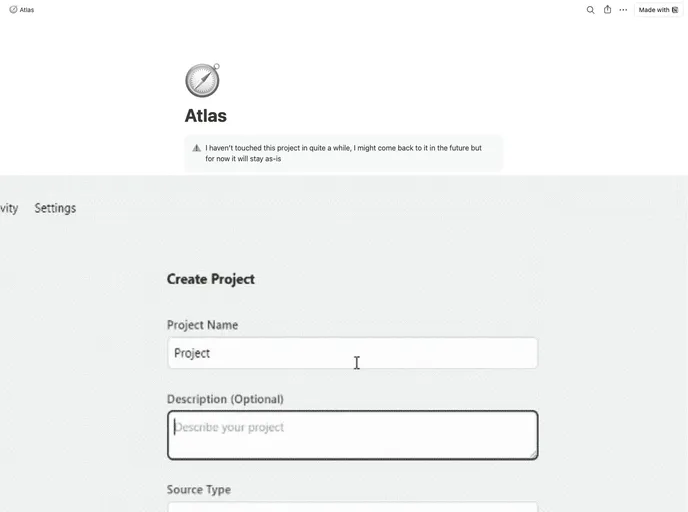






A self-hosted PaaS web app / interface / ui for Dokku with git deploys, rollbacks, databases, auto-SSL and more
Overview
BulletBullet is a powerful and intuitive web UI designed for users who want to self-host their own Platform as a Service (PaaS). Built on top of Dokku, BulletBullet brings an array of features that streamline the deployment process and simplify management tasks for developers. This tool is especially beneficial for those looking to leverage the Dokku ecosystem efficiently, making it ideal for modern web application deployments.
With functionalities that support automatic deployments, SSL management, and comprehensive audit logs, BulletBullet focuses on enhancing user experience while maintaining top-notch performance. The installation process is straightforward, making it accessible even for those who aren't highly technical, yet still catering to developers seeking robust infrastructure control.
Features
-
Automatic Deployments from GitHub: Seamlessly deploy your applications directly from GitHub repositories, making integration a breeze.
-
Deploy from Multiple Sources: Supports deploying from Docker Hub, remote Git URLs, and both GitHub and GitLab, offering flexibility in managing project source code.
-
Automatic SSL Certificates and Renewal: Ensures your applications are secure with auto-generated SSL certificates and easy renewal processes.
-
Database Provisioning and Backup Management: Manage databases effortlessly, including provisioning new ones and handling backups, to ensure data safety.
-
Advanced Domain and Environment Management: Control domains, configure NGINX, and set environment variables all through a user-friendly interface.
-
Maintenance Mode and Log Viewing: Monitor your applications easily with maintenance mode toggle and the ability to view logs for debugging.
-
Deployment Rollbacks: Easily revert to any previous commit, providing peace of mind during updates and changes.
-
Comprehensive REST API: Access a well-documented and accessible REST API for smoother integration with existing systems.
-
Full Audit Logs and 2FA: Keep track of activities with full audit logs and enhance account security with per-account two-factor authentication.
- Gatsby
GatsbyJS is a free and open-source static site generator based on React. It uses a modern development stack including Webpack, GraphQL, and modern JavaScript and CSS frameworks. It also provides a rich set of plugins, starters, and themes.
- Next.js
Next.js is a React-based web framework that enables server-side rendering, static site generation, and other powerful features for building modern web applications.
- React
React is a widely used JavaScript library for building user interfaces and single-page applications. It follows a component-based architecture and uses a virtual DOM to efficiently update and render UI components
- Vue
Vue.js is a lightweight and flexible JavaScript framework that allows developers to easily build dynamic and reactive user interfaces. Its intuitive syntax, modular architecture, and focus on performance make it a popular choice for modern web development.
- Tailwind
Tailwind CSS is a utility-first CSS framework that provides pre-defined classes for building responsive and customizable user interfaces.
- Headless UI
Headless UI is a set of completely unstyled, fully accessible UI components for React, Vue, and Alpine.js that empower developers to build their own fully accessible custom UI components. Headless UI allows developers to focus on building accessible and highly functional user interfaces, without the need to worry about styling or layout.
- Prisma
Prisma is a server-side library that helps developers read and write data to the database in an intuitive, efficient and safe way.
- Fullstack

A fullstack boilerplate provides a starter application that includes both frontend and backend. It should include database, auth, payments, user roles and other backend services to build a fully featured saas or webapps.
- Docker

A website that uses Docker for containerization to streamline development, testing, and deployment workflows. This includes features such as containerization of dependencies, automated builds and deployments, and container orchestration to ensure scalability and availability.
- Postcss

PostCSS is a popular open-source tool that enables web developers to transform CSS styles with JavaScript plugins. It allows for efficient processing of CSS styles, from applying vendor prefixes to improving browser compatibility, ultimately resulting in cleaner, faster, and more maintainable code.
- Typescript

TypeScript is a superset of JavaScript, providing optional static typing, classes, interfaces, and other features that help developers write more maintainable and scalable code. TypeScript's static typing system can catch errors at compile-time, making it easier to build and maintain large applications.