
Angular Blog
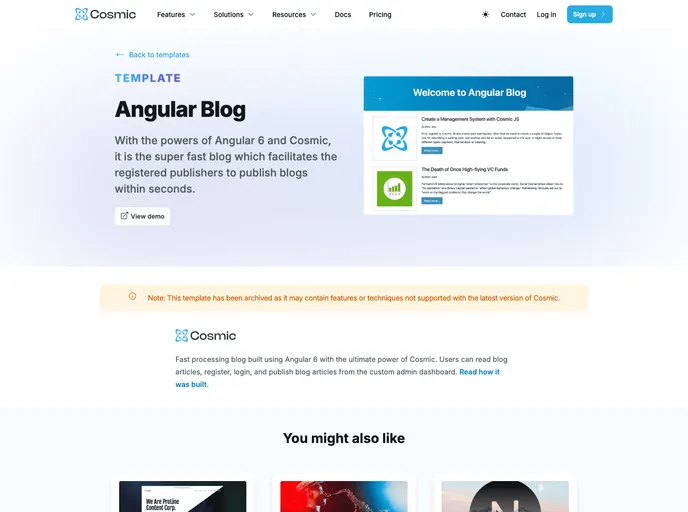




A Blog built using Angular and the Cosmic headless CMS
Overview:
The Angular Blog is a project generated with Angular CLI and Cosmic JS. It provides a blog template built using Angular that can be used as a starting point for developing a blog application.
Features:
- Angular CLI: The project is generated with Angular CLI, which provides a command line interface for creating and managing Angular projects.
- Cosmic JS: The project is integrated with Cosmic JS, a headless content management system. This allows users to easily manage and publish their blog content.
- Responsive Design: The blog template is designed to be responsive, ensuring that it looks and functions well on a variety of devices and screen sizes.
Summary:
The Angular Blog is a pre-built blog template generated with Angular CLI and integrated with Cosmic JS. It provides a starting point for developing a blog application with features such as Angular CLI integration, Cosmic JS content management, and responsive design. The installation process involves cloning the project repository, installing dependencies, and running the development server.
- Angular
Angular is a TypeScript-based open-source framework by Google for building dynamic single-page applications and cross-platform mobile apps with MVC architecture and a rich set of features.
- Express
Express.js is a simple Node.js framework for single, multi-page, and hybrid web applications.
- Bootstrap
Bootstrap is the most popular CSS Framework for developing responsive and mobile-first websites.
- Cosmic
Cosmic is a headless CMS that enables developers to build websites and applications using any tech stack. It features a user-friendly dashboard for managing content, powerful API for retrieving data, and easy integration with popular frontend frameworks and tools.
- Typescript

TypeScript is a superset of JavaScript, providing optional static typing, classes, interfaces, and other features that help developers write more maintainable and scalable code. TypeScript's static typing system can catch errors at compile-time, making it easier to build and maintain large applications.