
Rain Of Change
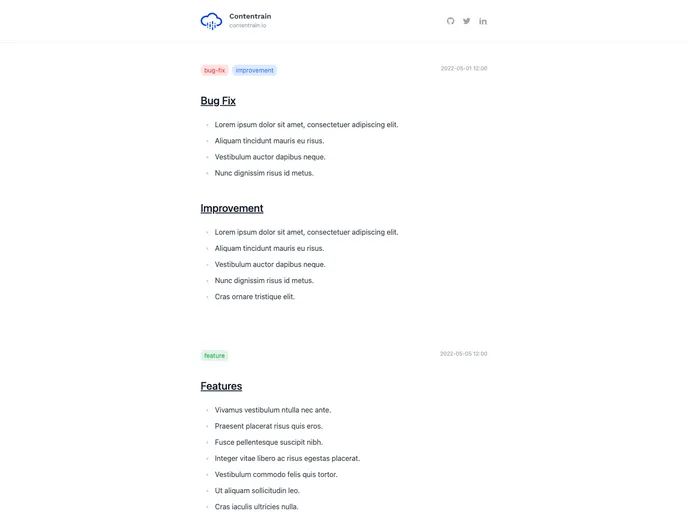


Contentrain NuxtJS and TailwindCSS Changelog template.
Overview
Rain Of Change is an innovative changelog template designed for developers who utilize NuxtJS and TailwindCSS. This template simplifies the process of documenting changes in a project, making it easier to communicate updates to team members and stakeholders. With its elegant design and user-friendly interface, Rain Of Change is perfect for creating clean and professional changelogs.
The integration of TailwindCSS allows for customizable styling, providing flexibility in how information is presented. Whether you’re tracking minor updates or significant revisions, Rain Of Change offers a streamlined solution for keeping everyone informed.
Features
- Responsive Design: Adapts seamlessly to various devices, ensuring your changelog looks great on both desktop and mobile screens.
- Easy Customization: With TailwindCSS, you can easily modify the look and feel to match your branding and project needs.
- Clear Versioning: Structured sections for versioning make it easy to track and showcase changes over time.
- User-Friendly Layout: Intuitive navigation allows for quick access to crucial information, enhancing user experience.
- Markdown Support: Easily format your text using Markdown, facilitating straightforward documentation of details and updates.
- Lightweight Framework: Built with NuxtJS, it ensures fast loading times and a smooth performance for end users.
- Cross-Browser Compatibility: Works effectively on all major web browsers, ensuring that your audience has consistent access.
- Nuxt
nuxt.js is a lightweight and flexible JavaScript framework that allows developers to easily build dynamic and reactive user interfaces. Its intuitive syntax, modular architecture, and focus on performance make it a popular choice for modern web development.
- Tailwind
Tailwind CSS is a utility-first CSS framework that provides pre-defined classes for building responsive and customizable user interfaces.