
Strapi Plugin Notes
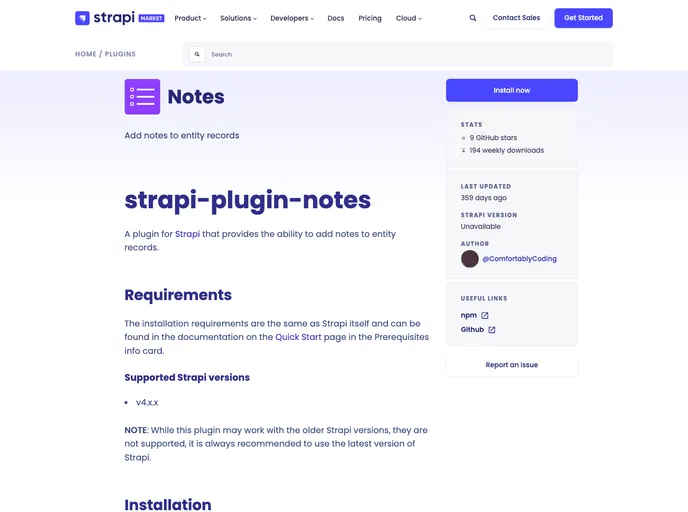


A plugin for Strapi Headless CMS that provides the ability to add notes to entity records.
Overview
The Strapi plugin "strapi-plugin-notes" is a useful tool for adding notes to entity records within a Strapi application. It provides an additional section in the edit view of all content types where users can add, edit, and delete notes associated with specific records.
Features
- Notes Section: Adds a notes section to the edit view of all content types.
- Add New Note: Allows users to add a new note to a specific entity record.
- Edit Note: Enables users to edit existing notes associated with entity records.
- Delete Note: Provides the ability to delete notes from entity records.
Summary
The "strapi-plugin-notes" is a valuable plugin for Strapi users who need to add notes to entity records. With features such as a dedicated notes section in the edit view, the ability to add, edit, and delete notes, this plugin enhances the functionality and usability of the Strapi application. It is recommended to use the latest version of Strapi for optimal compatibility and support. If any bugs are encountered, users are encouraged to report them as Github Issues.
- React
React is a widely used JavaScript library for building user interfaces and single-page applications. It follows a component-based architecture and uses a virtual DOM to efficiently update and render UI components
- Styled Components
Styled Components is a popular library for styling React components using CSS syntax. It allows you to write CSS in your JavaScript code, making it easier to create dynamic styles that are specific to each component.
- Strapi
Strapi is an open source headless CMS that provides a customizable content management system and API for your projects. It allows you to manage content in a visual interface and use a REST or GraphQL API to retrieve the data.
- Eslint

ESLint is a linter for JavaScript that analyzes code to detect and report on potential problems and errors, as well as enforce consistent code style and best practices, helping developers to write cleaner, more maintainable code.