
Angular Velocity
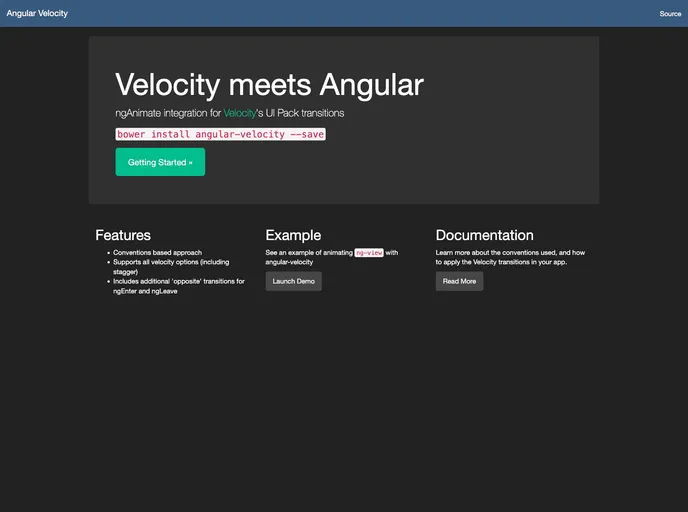

AngularJS ngAnimate integration for Velocity's UI pack plugin.
Overview
Angular Velocity offers a seamless integration between AngularJS and the Velocity animation library, enhancing the animation capabilities of your web applications. This utility allows developers to utilize the powerful Velocity animations within AngularJS, particularly taking advantage of the ngAnimate module. Whether you're creating dynamic UI transitions or simply looking to add some flair to your components, Angular Velocity simplifies the process.
The setup is relatively straightforward, whether you opt to install via Bower or npm. With the right dependencies in place, you can start implementing animations that not only enrich user experience but also maintain performance. Let's delve into some of the standout features that make Angular Velocity a notable choice for Angular developers.
Features
-
Angular Dependency Declaration: Integrates seamlessly with AngularJS and requires the ngAnimate module, allowing easy implementation of animations.
-
Standardized Naming Conventions: Transitions from Velocity are transformed into Angular-friendly class names, making it intuitive to apply animations to your elements.
-
Opposite Animations: For every directional 'In' animation, an 'Out' counterpart is available, enhancing flexibility for element transitions like ngShow/ngHide.
-
Independent Enter and Leave Transitions: Users can specify enter and leave animations separately, providing fine-grained control over how elements appear and disappear.
-
Customizable Velocity Options: Set Velocity options through the data-velocity-opts attribute, allowing for dynamic binding and scoped object usage.
-
Staggered Animations: Supports staggered effects for ngEnter and ngLeave, particularly beneficial for lists generated via ngRepeat, creating a more polished appearance.
-
Complete Function Integration: The Velocity complete callback can be utilized to execute additional logic once animations are finished, ensuring smooth transitions within the Angular digest cycle.
-
Community Driven: The project encourages contributions and collaboration, maintaining flexibility and adaptability for developers needing to customize their animation experiences.
- Angular
Angular is a TypeScript-based open-source framework by Google for building dynamic single-page applications and cross-platform mobile apps with MVC architecture and a rich set of features.