
Django Flags

Feature flags for Django projects
Overview
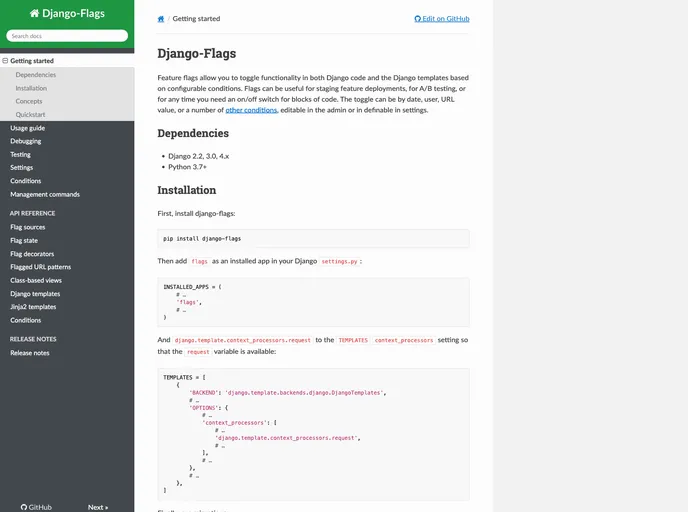
Django-Flags is an innovative tool designed for managing feature flags within Django applications. It allows developers to toggle functionality in both code and templates based on various configurable conditions. This flexibility is particularly beneficial for staging deployments, conducting A/B tests, or simply managing the visibility of different features in real-time.
With its user-friendly setup and integration with Django's admin interface, Django-Flags simplifies the process of feature management in your projects. Whether you're enabling a new user interface, testing different algorithms, or controlling access based on specific criteria, this tool offers robust support for developers looking to enhance their workflows.
Features
- Feature Toggle: Easily enable or disable features in your application based on user roles, dates, or other conditions.
- Django Integration: Seamlessly integrates into your Django project for a cohesive experience with existing functionality.
- User-Friendly Admin Interface: Manage feature flags effortlessly through the Django admin panel, allowing for quick configuration changes on the fly.
- Versatile Conditions: Define toggles based on various criteria such as user, URL values, and custom settings, providing tailored control over features.
- Open Source: As an ethical open-source project, Django-Flags encourages community contributions and collaboration.
- Comprehensive Documentation: Access detailed guides, API references, and best practices to get started and make the most of its capabilities.
- Built on Strong Foundations: Forked from established projects, Django-Flags benefits from tried-and-true principles and practices in feature flag management.
Overall, Django-Flags is a powerful addition to any Django developer's toolkit, providing the necessary flexibility and control to manage features effectively.
- Django
Django is a high-level Python web framework that encourages rapid development and clean, pragmatic design. It follows the model-view-controller (MVC) architectural pattern, providing an extensive set of built-in tools and conventions to streamline the creation of robust and scalable web applications.