
Carbon For Ibm Dotcom Nextjs Test
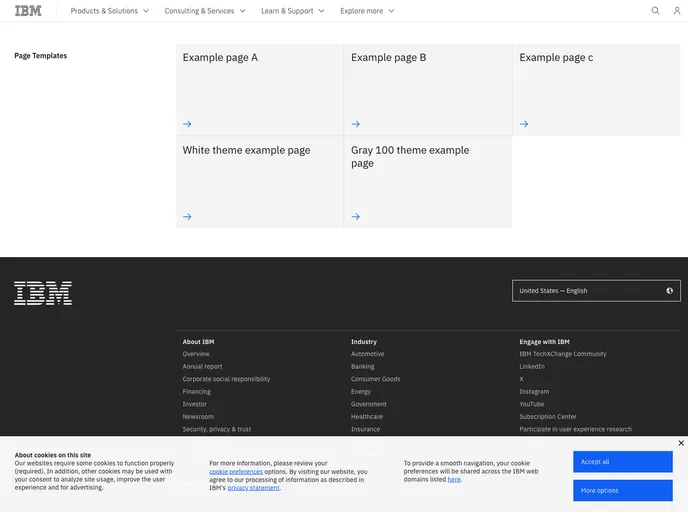




This is a sample NextJS application utilizing Carbon for IBM.com
Overview
The Next.js template for Carbon for IBM.com offers a robust starting point for developers looking to create dynamic and engaging web applications. This template implements a vanilla instance of Next.js integrated with the DotcomShell and encompasses various components and design patterns provided by Carbon for IBM.com. It simplifies the development process by providing pre-configured features that enhance usability and efficiency.
Designed with flexibility in mind, this template accommodates multiple languages and supports right-to-left (RTL) rendering, making it ideal for diverse user bases. Developers can quickly get started by cloning the repository and following straightforward setup instructions, allowing for rapid deployment of professional-grade web pages tailored for IBM.com.
Features
-
Easy Setup: Clone the repository using git, install dependencies, and you're ready to go. The setup process is user-friendly and efficient.
-
Right-to-Left (RTL) Support: Easily enable RTL rendering by setting an environment variable, ensuring accessibility for languages that read from right to left.
-
Page Language Functionality: Automatically handles alternate language links, making it simple to manage multi-language support for a global audience.
-
Digital Data Object (DDO): Comes with a customizable DDO for metadata collection, offering additional tools like live chat and analytics for improved page authoring.
-
Pre-rendered Meta Tags: The template includes necessary meta tags and IBM.com analytics scripts in the application to meet compliance and performance standards.
-
Update Flexibility: Developers can seamlessly pull the latest changes from the Carbon for IBM.com template, ensuring that their applications remain current with ongoing updates.
-
Static Site Export: Users can export their Next.js application as a static site, making it easy to deploy to production environments without complications.
These features combine to create a powerful framework for building sophisticated web applications that align with IBM.com standards.
- Express
Express.js is a simple Node.js framework for single, multi-page, and hybrid web applications.
- Next.js
Next.js is a React-based web framework that enables server-side rendering, static site generation, and other powerful features for building modern web applications.
- React
React is a widely used JavaScript library for building user interfaces and single-page applications. It follows a component-based architecture and uses a virtual DOM to efficiently update and render UI components
- SCSS
SCSS is a preprocessor scripting language that extends the capabilities of CSS by adding features such as variables, nesting, and mixins. It allows developers to write more efficient and maintainable CSS code, and helps to streamline the development process by reducing repetition and increasing reusability.
- Eslint

ESLint is a linter for JavaScript that analyzes code to detect and report on potential problems and errors, as well as enforce consistent code style and best practices, helping developers to write cleaner, more maintainable code.