
Juju Dashboard
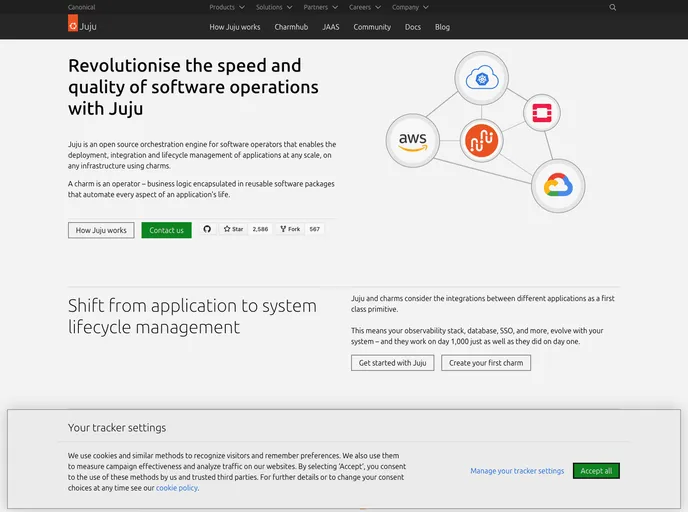

View the real-time status of your Juju or JAAS environment.
Overview
Juju Dashboard offers users a powerful interface to monitor the real-time status of their Juju or JAAS environments. Whether you're managing cloud-native applications or deploying microservices, this tool enhances your ability to stay informed about the health and performance of your infrastructure.
In the ever-evolving world of cloud management, having a centralized dashboard can greatly simplify operations. With Juju Dashboard, users are equipped with visualizations and insights that ensure efficient handling of resources and quicker response times to any issues.
Features
- Real-Time Monitoring: Get instant updates on the status of your Juju or JAAS environment, allowing for proactive management.
- User-Friendly Interface: Designed with simplicity in mind, the dashboard makes it easy for users of all skill levels to navigate.
- Comprehensive Metrics: View key performance indicators and health metrics for all deployed services at a glance.
- Customizable Views: Tailor your dashboard layout to highlight the information that matters most to you and your team.
- Alert Notifications: Receive timely alerts for any anomalies or performance issues, helping you respond quickly to potential problems.
- Collaborative Features: Share insights and status updates with team members to enhance collaboration and support.
- Integration Capabilities: Seamlessly integrate with other tools and services to expand functionality and streamline workflows.
- React
React is a widely used JavaScript library for building user interfaces and single-page applications. It follows a component-based architecture and uses a virtual DOM to efficiently update and render UI components
- Redux
Redux is a state management library for JavaScript apps that provides a predictable and centralized way to manage application state. It enables developers to write actions and reducers that update the state in response to user interactions, server responses, and other events, and can be used with a variety of front-end frameworks and back-end technologies.