
Blogit
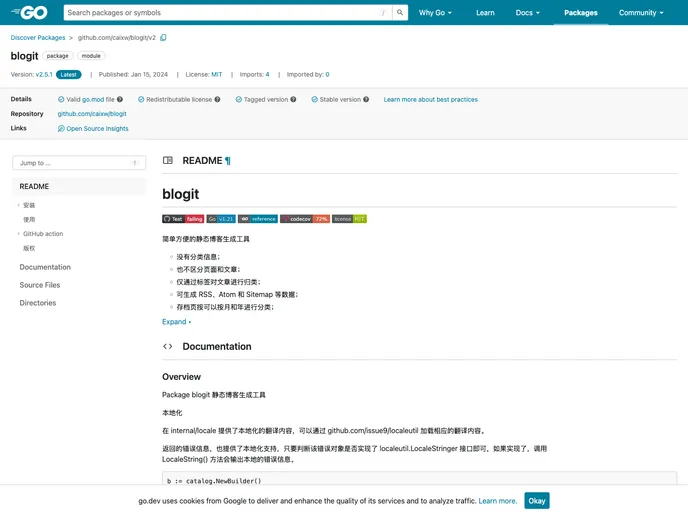
静态博客生成工具
Overview:
This is a product analysis for blogit, a simple and convenient static blog generation tool. The tool does not have categorization or differentiation between pages and articles, but it can classify articles using tags. It can generate data such as RSS, Atom, and Sitemap, and the archive page can be classified by month and year. It uses Go templates as the theme template syntax and allows for code highlighting. It can also generate static TOC (Table of Contents) data.
Features:
- No categorization or differentiation: The tool does not have classification for pages or articles, only tags are used for classification.
- Generates multiple data formats: It can generate RSS, Atom, and Sitemap data for the blog.
- Archiving by month and year: The archive page can be classified by month and year.
- Go template as theme template syntax: It utilizes Go templates as the syntax for the theme templates.
- Customizable code highlighting: Users can specify code highlighting in the theme.
- Static Table of Contents (TOC) generation: It can generate a static TOC for the blog.
Summary:
Blogit is a simple and convenient static blog generation tool. It allows for easy generation of static blogs without the need for extensive categorization or differentiation. The tool supports generating multiple data formats, archiving by month and year, customizable code highlighting, and generating static Table of Contents (TOC) data. It can be installed using brew for macOS and Linux users, or by downloading the binary from the GitHub releases page. Alternatively, Docker users can pull the container from docker.io or ghcr.io. The tool operates using Go templates as the theme template syntax, making it a versatile choice for creating static blogs.
- Docker

A website that uses Docker for containerization to streamline development, testing, and deployment workflows. This includes features such as containerization of dependencies, automated builds and deployments, and container orchestration to ensure scalability and availability.