
Astro Friday
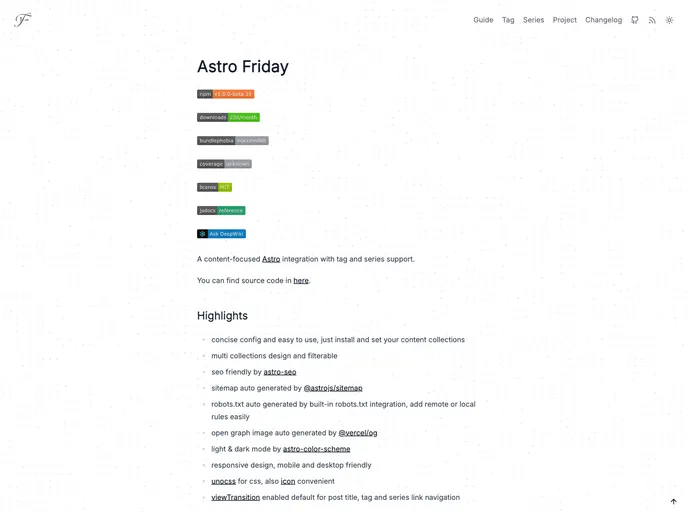


A content-focused Astro integration with tag and series support.
Overview
The Astro Blog Template is a work-in-progress template designed for building a blog using Astro. Astro is a static site generator that allows for seamless integration of different components and frameworks. This template offers various features such as a responsive design, light and dark mode, SEO optimization, sitemap generation, localization support, and more. By following the installation guide, users can easily set up this template for their own blog.
Features
- Astro Blog Building: Use Astro to effortlessly create a static site for your blog.
- Package Management with pnpm: Manage your project dependencies using pnpm as the package manager.
- SEO Optimization: Boost your blog's visibility with Astro's built-in SEO features.
- Sitemap Generation: Generate a sitemap for your blog using the Astro sitemap plugin.
- Robots.txt Configuration: Easily configure the robots.txt file for your blog using Astro's robots.txt plugin.
- Light & Dark Mode: Provide a user-friendly experience with light and dark mode toggle functionality.
- Responsive Design: Ensure your blog looks great on all devices with responsive design breakpoints at 768px, 1024px, and 1280px.
- UnoCSS: Benefit from the convenience of using UnoCSS for styling, including convenient icon integration.
- Localization Support: Enable multilingual support for your blog using Astro's i18n plugin.
- Local Search: Implement local search functionality using the Astro pagefind plugin.
- Series Support: Organize your blog posts by series using the series feature in the post frontmatter.
Summary
The Astro Blog Template offers a convenient and efficient solution for building a blog using Astro. With its numerous features, including SEO optimization, responsive design, light and dark mode, and more, this template provides a solid foundation for creating a visually appealing and user-friendly blog. By following the installation guide, users can quickly set up and customize this template to suit their specific needs.
- Astro
Astro is the all-in-one web framework designed for speed. Pull your content from anywhere and deploy everywhere, all powered by your favorite UI components and libraries.
- UnoCSS
UnoCSS is an instant, on-demand atomic CSS engine that generates utility classes at build time. It's highly customizable, extremely fast, and compatible with Tailwind CSS utilities while offering additional features like attributify mode and pure CSS icons.
- Blog

Blog websites feature posts written by one or more authors, organized by categories and tags, with a section for comments and archives sorted by date or topic. Additional features may include search bar, social media sharing, subscription or RSS feed, about and contact pages, and visual content.
- Templates & Themes

A template or theme refers to a pre-designed layout or structure that provides a basic framework for building a specific type of application or website. It typically includes good design, placeholder content and functional features, allowing developers to customize and fill in the details according to their specific needs.
- Eslint

ESLint is a linter for JavaScript that analyzes code to detect and report on potential problems and errors, as well as enforce consistent code style and best practices, helping developers to write cleaner, more maintainable code.