
Brisa
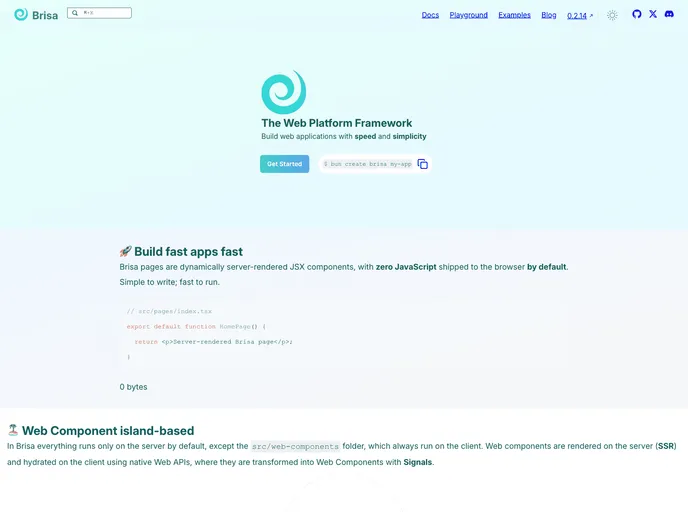
The Web Platform Framework.
Overview
Brisa is an innovative framework designed to streamline modern web development, catering particularly to developers looking for speed and efficiency in their projects. Currently in its 0.x experimental phase, it's an exciting tool for those interested in exploring new technologies and providing valuable feedback for future iterations. With a focus on simplicity and ease of use, Brisa offers a unique set of features aimed at enhancing the development experience.
Features
- Comprehensive Toolset: Brisa includes everything you need such as JSX, TypeScript, server/web components, and more all designed to optimize your workflow.
- Speed: Engineered for performance, Brisa allows for fast startup, builds, tests, deployments, and runtime operations.
- Internationalization (i18n) Support: Effortlessly manage text translations and routing, ensuring that only the necessary translations are included.
- Lightweight Design: The framework is impressively small, with a default size of 0B, increasing only to 2kB when server actions are utilized, and 3kB for web components.
- Flexible Output Options: With just a single configuration command, you can switch your web application output format to static, desktop, Android, or iOS apps.
- Community-Driven Development: Engage with an open community for suggestions and contributions, fostering a collaborative environment for improvement.
- Typescript

TypeScript is a superset of JavaScript, providing optional static typing, classes, interfaces, and other features that help developers write more maintainable and scalable code. TypeScript's static typing system can catch errors at compile-time, making it easier to build and maintain large applications.
- Web Components

Web components provide a way to create reusable, encapsulated UI components using standard web technologies such as HTML, CSS, and JavaScript. They allow developers to create complex UI components that can be easily shared across multiple projects and frameworks. Web components are built using four main specifications: Custom Elements, Shadow DOM, HTML Templates, and ES Modules.