
V Drag
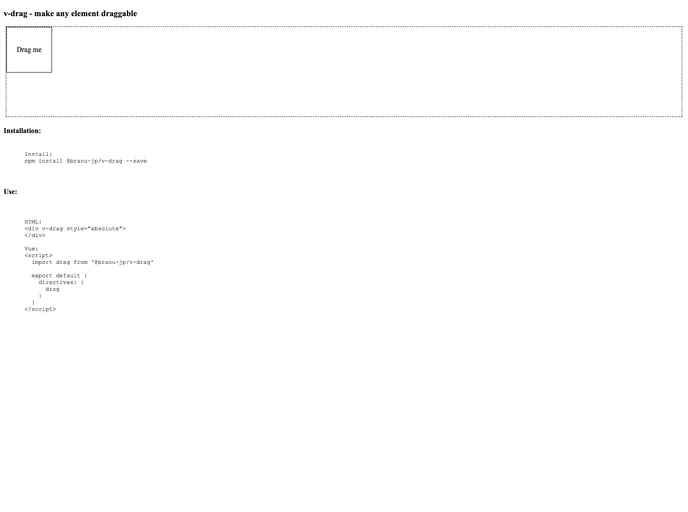

Vue draggable component (v-drag). Vue.jsのドラッガブル ディレクティブ (v-drag)
Overview
If you're looking for a lightweight and efficient way to create draggable components in your Vue.js applications, v-drag might be exactly what you need. It's a simple yet powerful draggable component designed for ease of use, allowing users to easily interact with their UI elements. Whether you’re building modals, panels, or any other draggable components, v-drag provides the flexibility to make your elements movable while keeping configuration minimal.
The component's intuitive setup and a variety of options make it a great choice for developers at any level. With compatibility for both Node.js and browser environments, v-drag offers a straightforward solution for adding draggable functionality to your Vue.js projects.
Features
-
Easy Integration: v-drag can be integrated effortlessly into your Vue.js application, allowing for quick implementation without complex configurations.
-
Draggable Areas: You can designate specific areas of an element to be draggable, enabling customized interactions based on your design needs.
-
Viewport Constraints: With the window-only modifier, you can prevent draggable elements from escaping the viewport, ensuring that they stay within view while being moved.
-
Position Requirement: To enable dragging, elements must have a
position: absolute;CSS rule, keeping the implementation straightforward and uniform. -
Flexibility for Modals: Perfect for modals, you can easily configure v-drag so that only the header area is draggable, enhancing user experience without compromising design.
-
Open Source: Built by the BRANU team, v-drag is an open-source project, allowing you to contribute or adapt it to fit your specific needs.
-
Lightweight Solution: This component adds minimal weight to your application, making it an efficient choice for developers focused on maintaining optimal performance.
- Vue
Vue.js is a lightweight and flexible JavaScript framework that allows developers to easily build dynamic and reactive user interfaces. Its intuitive syntax, modular architecture, and focus on performance make it a popular choice for modern web development.