
Portfolio Website Django Nextjs
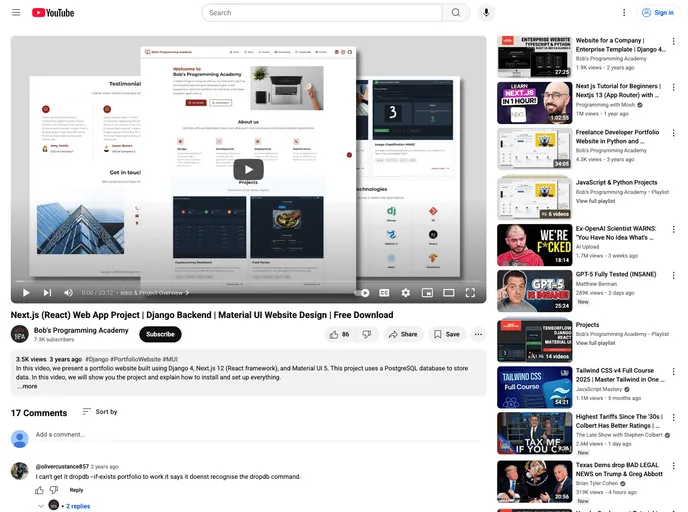



A portfolio website built using Django 4, Django REST Framework 3, Next.js 13, and Material UI 5. The app uses a PostgreSQL database to store data.
Overview
Building a portfolio website can be a daunting task, but with the right tools and frameworks, it can become much easier and more efficient. This portfolio website is developed using Django 4, Django REST Framework 3, Next.js 13, and Material UI 5, providing a robust structure for both backend and frontend development. The use of a PostgreSQL database for data storage ensures reliability and scalability, making this project an excellent choice for anyone looking to create a professional online portfolio.
This comprehensive setup not only facilitates the creation of a visually appealing site but also ensures that it is functional and easy to maintain. Whether you’re a developer looking to showcase your work or in need of a sleek platform to present your creative projects, this portfolio website offers a solid foundation to build upon.
Features
-
Django Backend: Utilizes Django 4 for a powerful backend framework, ensuring seamless functionality and easy integration with RESTful APIs.
-
Next.js Frontend: Leverages Next.js 13 for a dynamic frontend experience, providing excellent performance and SEO capabilities through server-side rendering.
-
Material UI: Incorporates Material UI 5 for sleek, modern design components that enhance user experience and maintain a professional aesthetic.
-
PostgreSQL Database: Uses PostgreSQL for reliable data storage, capable of efficiently managing large volumes of data.
-
Virtual Environment Setup: Easy setup with virtual environments isolating project dependencies, ensuring a clean development environment.
-
Admin Interface: Features a user-friendly Django Admin interface for efficient content management and data handling.
-
Testing Capabilities: Comprehensive testing options for both backend and frontend components, allowing for robust evaluation before deployment.
-
Customizable Environment Variables: Supports easy configuration of environment variables, adapting the application to various deployment settings without code changes.
- Django
Django is a high-level Python web framework that encourages rapid development and clean, pragmatic design. It follows the model-view-controller (MVC) architectural pattern, providing an extensive set of built-in tools and conventions to streamline the creation of robust and scalable web applications.
- Next.js
Next.js is a React-based web framework that enables server-side rendering, static site generation, and other powerful features for building modern web applications.
- Material UI
material-ui adds classes to Tailwind CSS for all common UI components. Classes like btn, card, etc. This allows us to focus on important things instead of making basic elements for every project.