
Portfolio Website Deployment
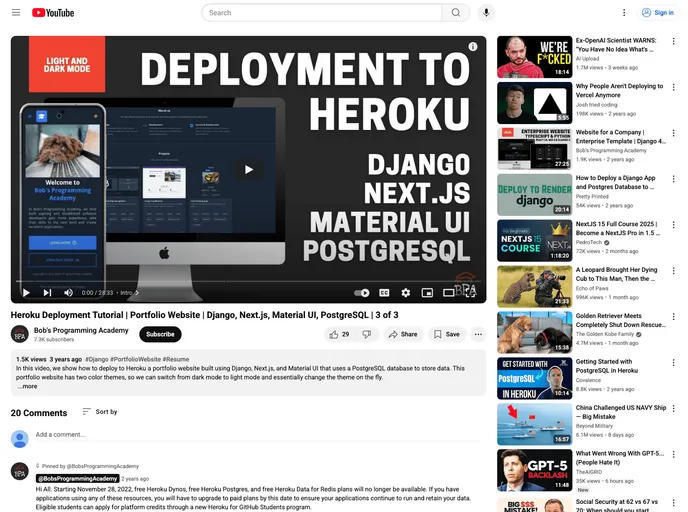



A portfolio website built using Django 4, Django REST Framework 3, Next.js 13, and Material UI 5. The app uses a PostgreSQL database to store data.
Overview:
The Portfolio Website is an impressive project that leverages some of the most popular technologies in web development, including Django, Next.js, and PostgreSQL. Built to showcase personal work or projects, this platform not only stands out for its clean design facilitated by Material UI but also for its powerful backend capabilities via Django and Django REST Framework. Users can easily interact through a dynamic interface, whether in dark mode or light mode, making it both versatile and user-friendly.
This application is designed for developers looking to create their own portfolio or enhance an existing one, providing a solid foundation for customization and deployment. With comprehensive installation and setup instructions provided, even those newer to web development will find it accessible.
Features:
- Django Backend: Utilizes Django 4 for a robust backend structure, facilitating the creation of a powerful portfolio application.
- API Capabilities: Integrated with Django REST Framework 3, enabling seamless data management and API endpoints for a modern web experience.
- Next.js Frontend: Built using Next.js 13, offering server-side rendering and improved performance for a smooth user experience.
- Material UI 5: Incorporates Material UI for a sleek and modern design aesthetic, enhancing user interface interaction with built-in responsive components.
- PostgreSQL Database: Utilizes PostgreSQL for reliable data storage, ensuring scalability and efficiency in handling user data.
- Customizable Environment: Offers customizable .env files for easy environment variable management, accommodating both development and production settings.
- Dark and Light Modes: Provides users with the option to switch between dark and light themes, enhancing usability and accessibility.
- Easy Deployment: Streamlined steps for deployment to Heroku, making it convenient to share your portfolio with the world.
- Django
Django is a high-level Python web framework that encourages rapid development and clean, pragmatic design. It follows the model-view-controller (MVC) architectural pattern, providing an extensive set of built-in tools and conventions to streamline the creation of robust and scalable web applications.
- Next.js
Next.js is a React-based web framework that enables server-side rendering, static site generation, and other powerful features for building modern web applications.
- React
React is a widely used JavaScript library for building user interfaces and single-page applications. It follows a component-based architecture and uses a virtual DOM to efficiently update and render UI components
- Material UI
material-ui adds classes to Tailwind CSS for all common UI components. Classes like btn, card, etc. This allows us to focus on important things instead of making basic elements for every project.
- Eslint

ESLint is a linter for JavaScript that analyzes code to detect and report on potential problems and errors, as well as enforce consistent code style and best practices, helping developers to write cleaner, more maintainable code.