
Portfolio Website
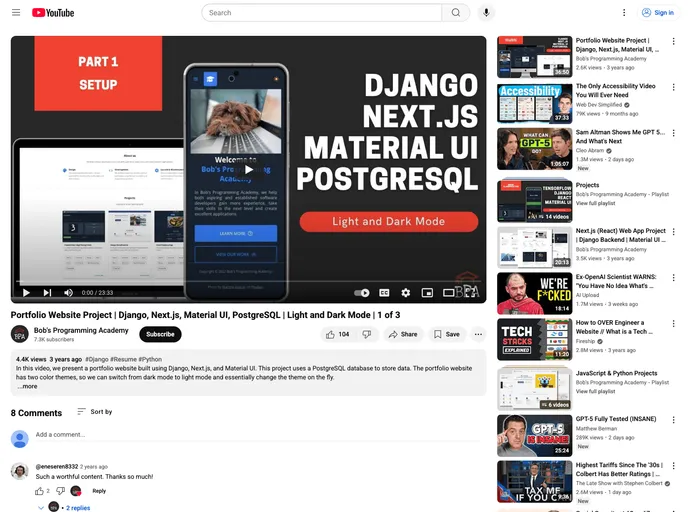



A portfolio website built using Django 4, Django REST Framework 3, Next.js 13, and Material UI 5. The app uses a PostgreSQL database to store data.
Overview
The Portfolio Website leverages the power of modern web development technologies, creating a seamless experience for both developers and users. Built with Django 4 and Django REST Framework 3 on the backend, combined with Next.js 13 and Material UI 5 on the frontend, this application serves as a comprehensive platform for showcasing work while providing a solid foundation for scalability and customization. The use of a PostgreSQL database ensures robust data management, making it an ideal choice for anyone looking to establish a professional online presence.
What sets this portfolio website apart is its flexible design that accommodates both dark and light modes, ensuring an appealing aesthetic for various user preferences. With a focus on ease of use and maintainability, it provides clear installation and operational guidelines, making it accessible even for those who may be new to web development.
Features
- Django 4 Integration: Utilizes the latest version of Django to provide robust backend support, ensuring a smooth user experience.
- Django REST Framework: Makes it easy to build RESTful APIs, allowing for dynamic interactions between the frontend and backend.
- Next.js 13 Framework: Offers server-side rendering capabilities, enhancing performance and SEO for the portfolio site.
- Material UI 5: Incorporates a modern design system for a polished and responsive user interface, ensuring a visually appealing presentation.
- PostgreSQL Database: Reliable database management system that facilitates efficient data handling and storage.
- Dark and Light Modes: Provides users the option to switch between dark and light themes, enhancing usability based on personal preference.
- Comprehensive Installation Guide: Step-by-step instructions for setup mean that users can easily deploy the application without extensive technical expertise.
- Environment Variables Support: Simplifies configuration management through
.envfiles, making it easy to customize settings for different development environments.
- Django
Django is a high-level Python web framework that encourages rapid development and clean, pragmatic design. It follows the model-view-controller (MVC) architectural pattern, providing an extensive set of built-in tools and conventions to streamline the creation of robust and scalable web applications.
- Next.js
Next.js is a React-based web framework that enables server-side rendering, static site generation, and other powerful features for building modern web applications.
- Material UI
material-ui adds classes to Tailwind CSS for all common UI components. Classes like btn, card, etc. This allows us to focus on important things instead of making basic elements for every project.