
Tokyo Free Black Nextjs Admin Dashboard
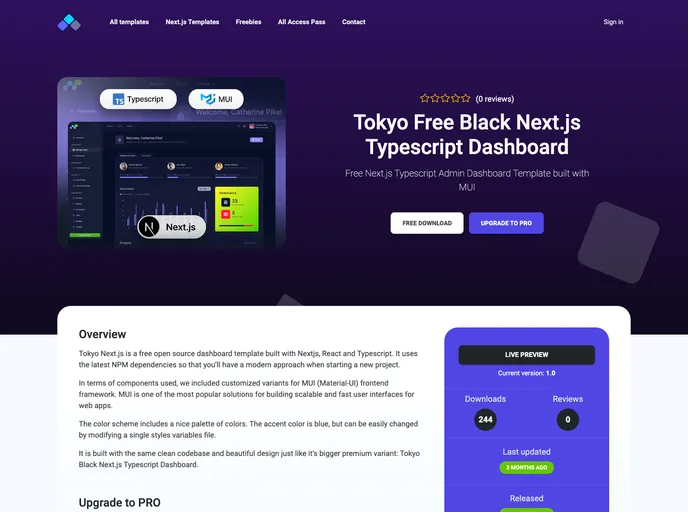


Free React Typescript Admin Dashboard Template built with MUI (Material-UI) featuring a dark color scheme
Overview:
The Free Material-UI Next.js Typescript Dashboard Template with Dark Color Scheme is a versatile and user-friendly template designed to help developers create modern and sleek dashboard interfaces for their web applications. With the integration of Material-UI, Next.js, and TypeScript, this template offers powerful functionality and an intuitive development experience.
Features:
- Material-UI Integration: The template leverages the power of Material-UI, providing a rich collection of pre-designed UI components and styling options.
- Next.js Framework: Built on top of Next.js, the template offers server-side rendering, efficient page routing, and optimized performance for faster and smoother user experiences.
- TypeScript Support: Developers can take advantage of the benefits of TypeScript, including static typing, enhanced code readability, and better tooling support.
- Dark Color Scheme: The template comes with a visually appealing dark color scheme, offering a modern and elegant look to the dashboard interface.
- Responsive Design: The template is designed to be fully responsive, ensuring a seamless experience across different screen sizes and devices.
- Modular Architecture: The template follows a modular architecture, making it easy to customize and extend with additional features and components.
- Authentication and Authorization: Support for user authentication and authorization is built into the template, allowing developers to easily implement secure login and access control features.
- Dashboard Widgets: The template provides a range of pre-built dashboard widgets, such as charts, graphs, and data tables, making it easier to visualize and present data effectively.
Summary:
The Free Material-UI Next.js Typescript Dashboard Template with Dark Color Scheme is a highly functional and visually appealing template that provides developers with the tools they need to create stylish and dynamic dashboard interfaces. With its integration of Material-UI, Next.js, and TypeScript, developers can enjoy powerful features, enhanced performance, and an efficient development workflow. Whether you're building a personal project or a commercial application, this template offers a solid foundation for creating modern and engaging dashboards.
- Next.js
Next.js is a React-based web framework that enables server-side rendering, static site generation, and other powerful features for building modern web applications.
- React
React is a widely used JavaScript library for building user interfaces and single-page applications. It follows a component-based architecture and uses a virtual DOM to efficiently update and render UI components
- Material UI
material-ui adds classes to Tailwind CSS for all common UI components. Classes like btn, card, etc. This allows us to focus on important things instead of making basic elements for every project.
- Eslint

ESLint is a linter for JavaScript that analyzes code to detect and report on potential problems and errors, as well as enforce consistent code style and best practices, helping developers to write cleaner, more maintainable code.
- Typescript

TypeScript is a superset of JavaScript, providing optional static typing, classes, interfaces, and other features that help developers write more maintainable and scalable code. TypeScript's static typing system can catch errors at compile-time, making it easier to build and maintain large applications.