
Staticsitegenerators
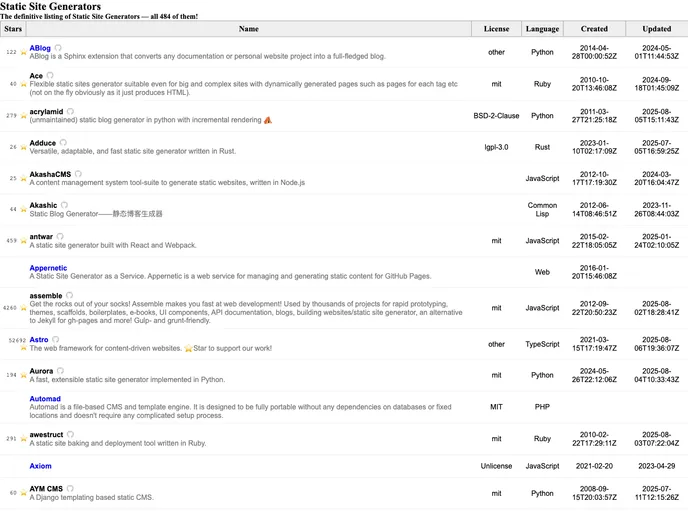
A comprehensive, partially automatically generated comparison of static site generators
Overview
Static site generators offer a promising way for developers and content creators to build websites with speed and efficiency. By generating web pages in advance rather than building them dynamically upon each user request, these generators allow for faster load times and reduced server costs. This can be particularly beneficial for blogs, portfolios, and documentation sites where performance and simplicity are prioritized. The Static Site Generators Listing presents a comprehensive comparison of various generators, aimed at enhancing the ease of finding the right one for your project.
This listing focuses specifically on flat-file content management systems and static site generators, setting it apart from dynamic server options like WordPress. With a user-friendly setup process and extensive documentation, this resource makes it easy for anyone from beginners to seasoned developers to navigate the multitude of options available.
Features
-
Comprehensive Comparison: Offers a vast array of static site generators alongside meta data, ensuring users can make informed decisions.
-
Focused Content Management: Specifically targets flat-file systems and static site generators, excluding dynamic servers to streamline choices.
-
Automated Entry Testing: Submissions are automatically tested upon pull requests, enhancing reliability and reducing manual errors during development.
-
Easy Setup Instructions: Clear guidance on the installation process for Node.js and local dependencies makes getting started a breeze.
-
Detailed API Documentation: Complete documentation is available, allowing developers to seamlessly integrate the npm package into their existing projects.
-
Active Community Contributions: Encourages user involvement and enhancement through contributions, ensuring the project continues to evolve and improve.
-
Historical Release Notes: Maintains a HISTORY.md file where users can track changes and updates to the project over time.
-
Contributions Encouraged: Offers clear guidelines for contributing and improving the project, fostering an active and collaborative environment.
- Eslint

ESLint is a linter for JavaScript that analyzes code to detect and report on potential problems and errors, as well as enforce consistent code style and best practices, helping developers to write cleaner, more maintainable code.
- Typescript

TypeScript is a superset of JavaScript, providing optional static typing, classes, interfaces, and other features that help developers write more maintainable and scalable code. TypeScript's static typing system can catch errors at compile-time, making it easier to build and maintain large applications.