
Tailnext
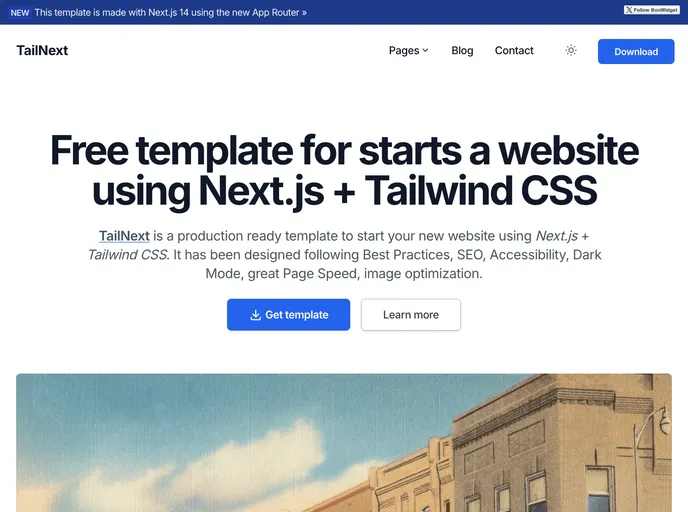


TailNext: Free template using Next.js 14 app router and Tailwind CSS.
Overview
Tailnext is an innovative and open-source template built on NextJS and Tailwind CSS, designed to streamline the website creation process while adhering to best practices. Perfect for developers and designers, it offers a solid foundation for building fast, responsive, and SEO-friendly websites with minimal setup.
With its robust features and community-driven support, Tailnext promises to simplify the development experience, whether you're launching a personal blog, business site, or portfolio.
Features
- Tailwind CSS Integration: Seamlessly integrates with Tailwind CSS and supports dark mode for an improved user experience.
- Production-Ready Performance: Achieves impressive scores in Lighthouse and PageSpeed Insights, ensuring your site is optimized for performance.
- Image and Font Optimization: Includes built-in features for optimizing images and fonts, enhancing loading times and user experience.
- SEO Friendly Blog: Offers a fast and optimized blogging platform that enhances discoverability on search engines.
- Automated Sitemap and Robots.txt: Generates a project sitemap and robots.txt file based on your routes for better indexing by search engines.
- Simple Commands: Provides easy-to-use commands to manage your project, from installing dependencies to building the final site.
- Active Community Contributions: Welcomes contributions and feedback, fostering an inclusive environment for ongoing enhancements and support.
- Next.js
Next.js is a React-based web framework that enables server-side rendering, static site generation, and other powerful features for building modern web applications.
- React
React is a widely used JavaScript library for building user interfaces and single-page applications. It follows a component-based architecture and uses a virtual DOM to efficiently update and render UI components
- Tailwind
Tailwind CSS is a utility-first CSS framework that provides pre-defined classes for building responsive and customizable user interfaces.
- Blog

Blog websites feature posts written by one or more authors, organized by categories and tags, with a section for comments and archives sorted by date or topic. Additional features may include search bar, social media sharing, subscription or RSS feed, about and contact pages, and visual content.
- Landing Page

A landing page is a standalone web page designed to promote a specific product, service, or offer. Landing pages are used in marketing campaigns to drive conversions and increase revenue, and typically include a clear call to action, minimal distractions, and a focus on the benefits of the product or service.
- Templates & Themes

A template or theme refers to a pre-designed layout or structure that provides a basic framework for building a specific type of application or website. It typically includes good design, placeholder content and functional features, allowing developers to customize and fill in the details according to their specific needs.
- Eslint

ESLint is a linter for JavaScript that analyzes code to detect and report on potential problems and errors, as well as enforce consistent code style and best practices, helping developers to write cleaner, more maintainable code.
- Postcss

PostCSS is a popular open-source tool that enables web developers to transform CSS styles with JavaScript plugins. It allows for efficient processing of CSS styles, from applying vendor prefixes to improving browser compatibility, ultimately resulting in cleaner, faster, and more maintainable code.
- Storybook
Storybook is a tool for developing and testing UI components in isolation. It provides a sandbox environment where you can experiment with different props and states to see how your component responds.
- Typescript

TypeScript is a superset of JavaScript, providing optional static typing, classes, interfaces, and other features that help developers write more maintainable and scalable code. TypeScript's static typing system can catch errors at compile-time, making it easier to build and maintain large applications.