
AngularWeb3
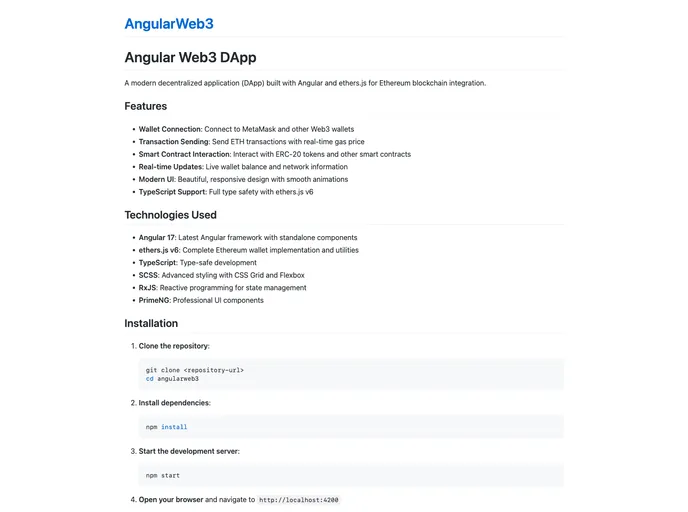

Template for Angular and web3 dependencies
Overview
AngularWeb3 serves as a powerful template designed specifically for developers looking to integrate Angular with web3 dependencies. By bridging the gap between modern front-end development and blockchain technology, this template provides a streamlined environment for creating decentralized applications (dApps) efficiently.
The utility of AngularWeb3 lies in its ease of use and versatility. Ideal for both seasoned developers and those new to blockchain programming, this template aims to simplify the process of building robust, interactive applications that leverage blockchain technology, enhancing user experience and engagement.
Features
-
Seamless Angular Integration: Built specifically for Angular, this template allows developers to utilize familiar Angular features while working with web3 technologies.
-
Pre-configured Web3 Dependencies: Comes pre-packed with essential web3 libraries, enabling quick access to blockchain functionalities without the hassle of installation and configuration.
-
Customizable Components: Offers a variety of customizable components tailored for dApp development, providing flexibility to create unique user interfaces.
-
Responsive Design: Ensures that applications built with AngularWeb3 are mobile-friendly, enabling access across different devices and screen sizes.
-
Extensive Documentation: Includes comprehensive guides and examples to help developers quickly understand and utilize the template, regardless of their skill level.
-
Community Support: Benefits from a growing community of developers who share insights, solutions, and best practices, fostering collaboration and knowledge sharing.
-
Performance Optimization: Optimized for speed and efficiency, ensuring that dApps built on this template run smoothly without lag or slow loading times.
- Angular
Angular is a TypeScript-based open-source framework by Google for building dynamic single-page applications and cross-platform mobile apps with MVC architecture and a rich set of features.
- Typescript

TypeScript is a superset of JavaScript, providing optional static typing, classes, interfaces, and other features that help developers write more maintainable and scalable code. TypeScript's static typing system can catch errors at compile-time, making it easier to build and maintain large applications.