
Foodsale
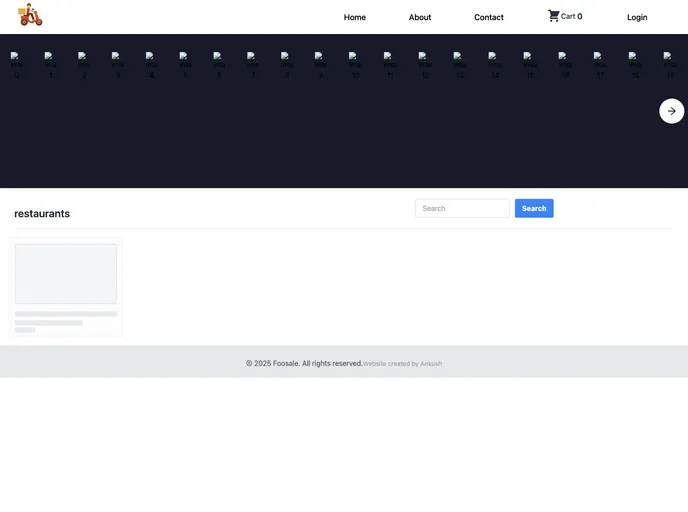


It utilizes Swiggy's live API data to fetch real-time restaurant information, and includes features such as infinite scrolling, shopping cart feature using Redux Toolkit, and UI configuration with conditional rendering and caching for better user experience. Additionally, the app implements Shim...
Overview
FoodSale is an innovative web application designed for food enthusiasts who seek a hassle-free way to explore and order from various restaurants. By utilizing Swiggy's live API data, this platform provides users with real-time information, ensuring that they have access to the latest offerings from their favorite dining spots. Whether you're organizing a dinner party or just craving a quick meal, FoodSale streamlines the process and enhances your dining experience.
The user-friendly interface and powerful features of FoodSale make it a standout choice for anyone looking to transition from tedious restaurant searches to a seamless food ordering process. With its emphasis on performance and user experience, this application is clearly designed for the modern foodie.
Features
- Real-Time Data: Utilizes Swiggy's live API to fetch up-to-date restaurant information, ensuring you have the latest menus and availability at your fingertips.
- Dynamic Search Bar: Equipped with auto-suggestion and debouncing techniques to offer a smooth search experience, making it easy to find your preferred restaurants quickly.
- Infinite Scrolling: Enhances browsing experience by allowing users to scroll through restaurant listings without interruptions, ensuring a fluid exploration of options.
- Efficient API Handling: Backend server is built with Node.js and Express.js to manage API requests effectively while interacting seamlessly with Swiggy's data.
- Shopping Cart Functionality: Implemented with Redux Toolkit, this feature simplifies the order process by allowing users to easily manage their selections.
- Performance Optimization: Incorporates Shimmer UI, lazy loading, and dynamic routing to enhance speed and user navigation throughout the application.
- Modern Tech Stack: Built using robust technologies like React, Tailwind CSS, and Redux, ensuring a responsive and visually appealing interface.
- Seamless Navigation: Facilitated by React Router, allowing users to access various features and restaurant information with ease.
Overall, FoodSale is tailored to deliver an outstanding dining experience, catering to the needs of today’s busy consumers.
- React
React is a widely used JavaScript library for building user interfaces and single-page applications. It follows a component-based architecture and uses a virtual DOM to efficiently update and render UI components
- Tailwind
Tailwind CSS is a utility-first CSS framework that provides pre-defined classes for building responsive and customizable user interfaces.
- Postcss

PostCSS is a popular open-source tool that enables web developers to transform CSS styles with JavaScript plugins. It allows for efficient processing of CSS styles, from applying vendor prefixes to improving browser compatibility, ultimately resulting in cleaner, faster, and more maintainable code.
- Redux
Redux is a state management library for JavaScript apps that provides a predictable and centralized way to manage application state. It enables developers to write actions and reducers that update the state in response to user interactions, server responses, and other events, and can be used with a variety of front-end frameworks and back-end technologies.