
Semantic UI Sass
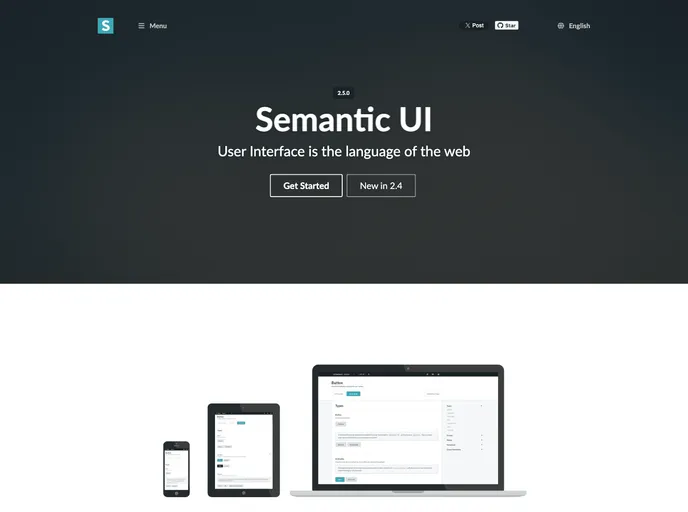

Semantic UI, converted to Sass.
Overview
Semantic UI is a popular front-end framework that provides a set of pre-built UI components and themes for web development. This analysis will focus on the Sass-powered version of Semantic UI, called semantic-ui-sass, which allows developers to easily integrate Semantic UI into their projects.
Features
- Sass-Powered: semantic-ui-sass is built using Sass, a powerful CSS preprocessor that adds functionality such as variables, mixins, and nested rules to CSS.
- Ready to Use: The package is ready to drop into any project, making it easy to incorporate Semantic UI's styles and components.
- Default Theme: semantic-ui-sass includes the default theme of Semantic UI.
Summary
semantic-ui-sass is a Sass-powered version of Semantic UI, a popular front-end framework. It allows developers to easily integrate Semantic UI into their projects and provides a set of pre-built UI components and themes. The installation process is straightforward, and developers can customize various aspects of Semantic UI to suit their needs.
- SCSS
SCSS is a preprocessor scripting language that extends the capabilities of CSS by adding features such as variables, nesting, and mixins. It allows developers to write more efficient and maintainable CSS code, and helps to streamline the development process by reducing repetition and increasing reusability.
- Semantic UI
Semantic UI is a popular front-end development framework that provides a set of pre-designed user interface components to help developers create responsive and mobile-friendly web applications with ease. It emphasizes a clear and intuitive naming convention for CSS classes, making it easier to customize and maintain the design of web applications.
- UI Kits & Components

A UI kit provides developers with a set of reusable components that can be easily integrated into a website or application. These components are pre-designed with consistent styling and functionality, allowing developers to save time and effort in the design and development process. UI kits can be either custom-built or third-party, and often include components for buttons, forms, typography, icons, and more.
- Gulp

Gulp.js is an old but popular site building tool that automates various repetitive development tasks in web development, such as compiling Sass, minifying JavaScript, and optimizing images.