
Elements
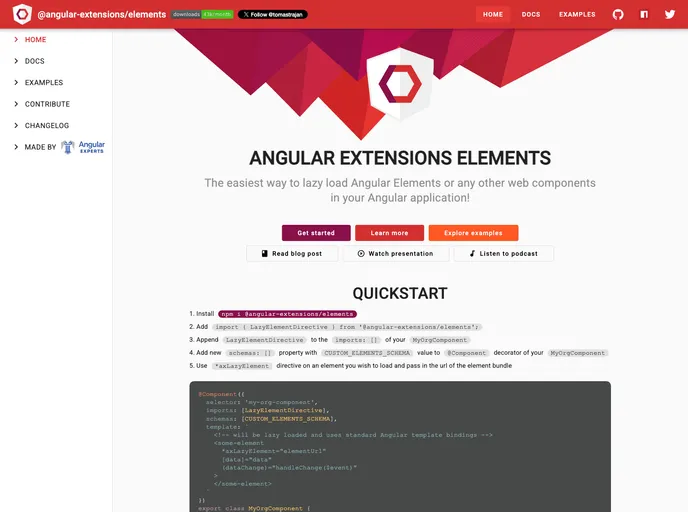


Lazy load Angular Elements (or any other web components / custom elements ) with ease!
Overview
Angular Extensions Elements provides a seamless way to lazy-load Angular Elements and other web components within your Angular applications. Designed to enhance performance and user experience, this library simplifies the integration of web components, making it easier for developers to manage their applications and optimize resource loading. With a straightforward installation process and clear documentation, it's a valuable asset for anyone looking to boost the efficiency of their projects.
The library is compatible with various versions of Angular, ensuring that developers can leverage its features regardless of the specific version they are working with. Its flexibility and user-friendly directives allow developers to implement sophisticated lazy-loading mechanisms with ease, paving the way for improved application performance and responsiveness.
Features
-
Easy Installation: Simply install via npm with
npm i @angular-extensions/elements, allowing for quick integration into your Angular project. -
Lazy Loading: Supports lazy-loading of Angular Elements and web components, enhancing your application’s performance by only loading components when needed.
-
Support for Multiple Versions: Compatible with Angular versions from 6.x to 15.x, making it versatile for various project requirements.
-
Custom Elements Schema: Automatically handles the setup for utilizing custom elements by incorporating
CUSTOM_ELEMENTS_SCHEMAin your component's decorator. -
Directives for Element Loading: Utilize the
*axLazyElementdirective on elements to streamline the loading process by specifying the element bundle URL. -
Comprehensive Documentation: Offers detailed documentation including getting started guides, use cases, and API references to assist developers in implementation.
-
Community Driven: Encourages contributions, allowing users to report issues, suggest improvements, or even participate in enhancing the library.
-
Optimized for Performance: Built with considerations for IVY support, ensuring efficient rendering and state management in your applications.
- Angular
Angular is a TypeScript-based open-source framework by Google for building dynamic single-page applications and cross-platform mobile apps with MVC architecture and a rich set of features.
- Express
Express.js is a simple Node.js framework for single, multi-page, and hybrid web applications.
- Eslint

ESLint is a linter for JavaScript that analyzes code to detect and report on potential problems and errors, as well as enforce consistent code style and best practices, helping developers to write cleaner, more maintainable code.
- Typescript

TypeScript is a superset of JavaScript, providing optional static typing, classes, interfaces, and other features that help developers write more maintainable and scalable code. TypeScript's static typing system can catch errors at compile-time, making it easier to build and maintain large applications.
- Web Components

Web components provide a way to create reusable, encapsulated UI components using standard web technologies such as HTML, CSS, and JavaScript. They allow developers to create complex UI components that can be easily shared across multiple projects and frameworks. Web components are built using four main specifications: Custom Elements, Shadow DOM, HTML Templates, and ES Modules.