
Next Ifood
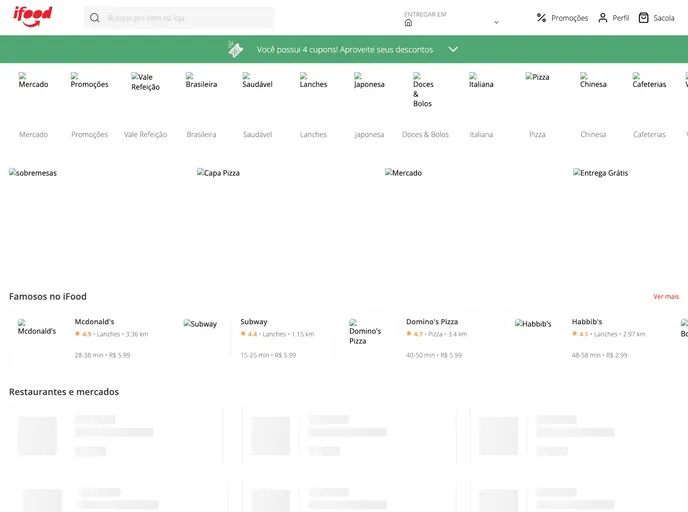


Ifood clone made with NextJS
Overview
iFood is an innovative front-end clone of the popular food delivery application, expertly crafted using Next.js. This project demonstrates a thorough understanding of modern web development principles while simulating the iFood interface, offering a seamless experience for users looking to order food online. The developer has implemented a fake API to display restaurant data, allowing for a realistic browsing experience. Additionally, this project emphasizes responsive design, ensuring that it looks great on all mobile devices.
One standout feature of this clone is its use of Server Side Rendering (SSR), which enhances performance and allows for faster initial loading times. This makes it an exciting option for anyone interested in both the culinary and tech worlds. Whether you're a developer looking for a solid example of a food delivery app or a foodie wanting to explore a new platform, this iFood clone is worth checking out.
Features
- Responsive Design: The application is fully optimized for mobile devices, ensuring a smooth user experience on all screens.
- Server Side Rendering (SSR): This approach improves loading times and enhances user experience by rendering pages on the server.
- Fake API Integration: Utilizes a fake API to showcase restaurant data, making the experience realistic without needing a live backend.
- Modern Tech Stack: Built with Next.js, React, and TypeScript, it showcases contemporary web development practices.
- Redux Integration: Implements Redux for state management, allowing for efficient data handling and application flow.
- Easy Development Setup: The project provides clear instructions on how to clone and run, making it accessible for new developers wanting to experiment.
- Custom Styling: Styled-components are used for styling, which allows for dynamic, component-level styles, enhancing maintainability.
This project is not just a learning opportunity but also a great example of combining creativity with technical skills.
- Next.js
Next.js is a React-based web framework that enables server-side rendering, static site generation, and other powerful features for building modern web applications.
- React
React is a widely used JavaScript library for building user interfaces and single-page applications. It follows a component-based architecture and uses a virtual DOM to efficiently update and render UI components
- Styled Components
Styled Components is a popular library for styling React components using CSS syntax. It allows you to write CSS in your JavaScript code, making it easier to create dynamic styles that are specific to each component.
- Eslint

ESLint is a linter for JavaScript that analyzes code to detect and report on potential problems and errors, as well as enforce consistent code style and best practices, helping developers to write cleaner, more maintainable code.
- Redux
Redux is a state management library for JavaScript apps that provides a predictable and centralized way to manage application state. It enables developers to write actions and reducers that update the state in response to user interactions, server responses, and other events, and can be used with a variety of front-end frameworks and back-end technologies.
- Typescript

TypeScript is a superset of JavaScript, providing optional static typing, classes, interfaces, and other features that help developers write more maintainable and scalable code. TypeScript's static typing system can catch errors at compile-time, making it easier to build and maintain large applications.