
Groovy
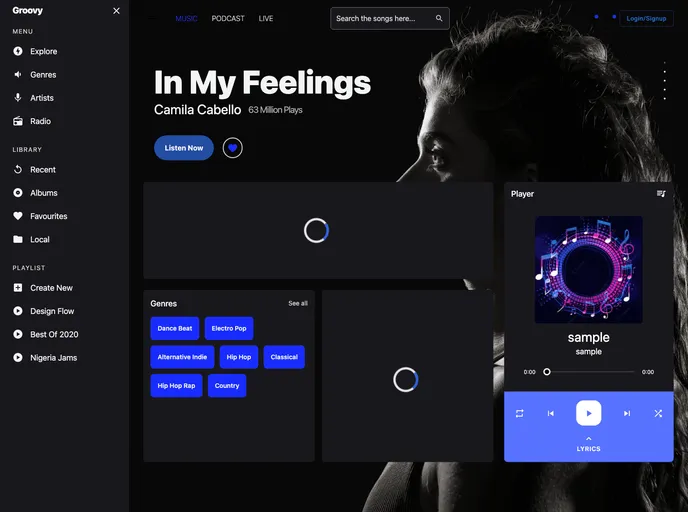


An opensource music platform built with NextJS/ReactJS and Shazam API
Overview
Groovy is an innovative open-source web music player designed for music enthusiasts who appreciate a modern and seamless listening experience. With a sleek UI, Groovy not only enhances the way you listen to music but also creates a space for developers to contribute and participate in its growth. As an early-stage project, it welcomes contributions from anyone familiar with popular web technologies.
The combination of ReactJS, NextJS, and TailwindCSS sets a solid foundation for Groovy, ensuring a responsive and visually appealing interface. Whether you're looking to enjoy your favorite tracks or dive into coding to help improve the app, Groovy is a fantastic platform for music lovers and developers alike.
Features
- Modern User Interface: Groovy leverages the latest design trends to create an engaging and user-friendly experience for all music lovers.
- Open Source: Being open source, Groovy encourages collaboration and contributions, making it a community-driven project that evolves with user input.
- Technology Stack: Built using ReactJS, NextJS, and TailwindCSS, allowing developers to work with familiar and powerful frameworks.
- Easy Installation: The setup process is straightforward, involving forking the repository and running the project locally with ease.
- Contribution Guidelines: Clear steps for contributing ensure that even beginners can participate and share their ideas or improvements.
- Active Community: With guidance for newcomers, the community around Groovy is supportive, fostering an environment where everyone can learn and grow.
- Responsive Design: Optimized for various devices, Groovy provides a consistent experience whether on mobile or desktop.
- MIT License: The project is licensed under MIT, allowing for flexibility in how it can be used and modified.
- Next.js
Next.js is a React-based web framework that enables server-side rendering, static site generation, and other powerful features for building modern web applications.
- React
React is a widely used JavaScript library for building user interfaces and single-page applications. It follows a component-based architecture and uses a virtual DOM to efficiently update and render UI components
- Tailwind
Tailwind CSS is a utility-first CSS framework that provides pre-defined classes for building responsive and customizable user interfaces.
- Headless UI
Headless UI is a set of completely unstyled, fully accessible UI components for React, Vue, and Alpine.js that empower developers to build their own fully accessible custom UI components. Headless UI allows developers to focus on building accessible and highly functional user interfaces, without the need to worry about styling or layout.
- Eslint

ESLint is a linter for JavaScript that analyzes code to detect and report on potential problems and errors, as well as enforce consistent code style and best practices, helping developers to write cleaner, more maintainable code.
- Postcss

PostCSS is a popular open-source tool that enables web developers to transform CSS styles with JavaScript plugins. It allows for efficient processing of CSS styles, from applying vendor prefixes to improving browser compatibility, ultimately resulting in cleaner, faster, and more maintainable code.