
React Bootstrap Table
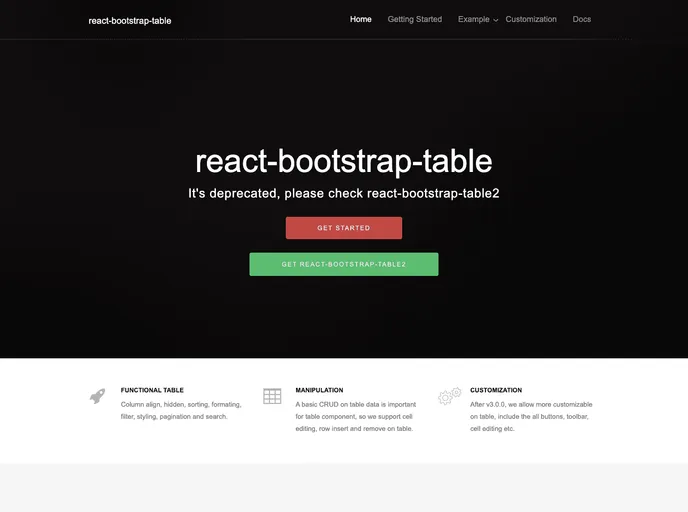


A Bootstrap table built with React.js
Overview
The react-bootstrap-table is a highly versatile and efficient table component tailored for React applications. Building on the foundational capabilities of Bootstrap, it streamlines the creation of responsive and customizable tables, making it easier for developers to manage table data dynamically. Although development for this project ceased after the second quarter of 2018, its features and functionalities remain noteworthy for any developer looking to implement a robust table interface in their app.
This component supports an extensive range of features designed to enhance usability and interactivity, making it a solid choice for those developing with React and Bootstrap. With options for pagination, row selection, and various styling customizations, react-bootstrap-table offers a comprehensive solution for managing data presentation in a user-friendly manner.
Features
- Customizable Design: Easily adjust the look and feel of your tables to match your application’s styles, from themes to colors.
- Pagination Support: Manage large datasets efficiently with built-in pagination options for better user experience.
- Row Selection: Implement row selection functionality to allow users to interact with specific data entries.
- Advanced Filtering: Utilize column filters and search capabilities to enable users to find the information they need quickly.
- Export to CSV: Seamlessly export your table data to CSV format for external use or reporting.
- Rich Function Hooks: Harness various lifecycle hooks for enhanced control over component behavior and data manipulation.
- Responsive Design: Ensure that tables adjust gracefully across different screen sizes, providing a mobile-friendly experience.
- Column Customization: Control column visibility, width, and sorting to maximize the table’s efficiency and effectiveness.
- React
React is a widely used JavaScript library for building user interfaces and single-page applications. It follows a component-based architecture and uses a virtual DOM to efficiently update and render UI components
- Bootstrap
Bootstrap is the most popular CSS Framework for developing responsive and mobile-first websites.
- Styled Components
Styled Components is a popular library for styling React components using CSS syntax. It allows you to write CSS in your JavaScript code, making it easier to create dynamic styles that are specific to each component.
- Eslint

ESLint is a linter for JavaScript that analyzes code to detect and report on potential problems and errors, as well as enforce consistent code style and best practices, helping developers to write cleaner, more maintainable code.
- Gulp

Gulp.js is an old but popular site building tool that automates various repetitive development tasks in web development, such as compiling Sass, minifying JavaScript, and optimizing images.
- Webpack

Webpack is a popular open-source module bundler for JavaScript applications that bundles and optimizes the code and its dependencies for production-ready deployment. It can also be used to transform other types of assets such as CSS, images, and fonts.