
AstronomicalData
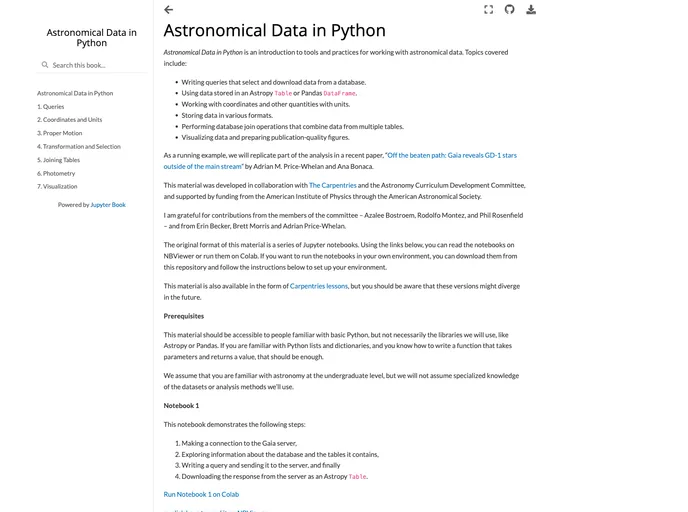
An introduction to working with astronomical data in Python.
Overview
Astronomical Data in Python serves as an essential introduction to the tools and methodologies for engaging with astronomical datasets. It covers a spectrum of topics ranging from querying databases effectively to transforming and visualizing complex data. Ideal for individuals with a basic understanding of Python, this resource opens up the world of astronomy by offering practical guidance through engaging Jupyter notebooks.
This material not only teaches how to handle data via libraries such as Astropy and Pandas but also provides concrete examples from recent astronomical research, including a collaborative analysis of Gaia data revealing GD-1 stars. With accessibility in mind, it caters to aspiring astronomers and data scientists alike, fostering a deeper understanding of both programming and astronomical concepts.
Features
- Database Queries: Learn how to write queries that effectively select and download astronomical data from vast databases.
- Data Handling: Utilize Astropy Tables and Pandas DataFrames to manipulate and analyze datasets conveniently.
- Coordinate Systems: Understand how to work with celestial coordinates and quantities with specified units for accurate data representation.
- Data Storage Options: Gain knowledge on how to store data in various formats, ensuring flexibility and ease of use.
- Database Joins: Master the art of performing join operations to integrate data across multiple tables, enriching your analyses.
- Visualization Techniques: Create publication-quality figures, enhancing the presentation of your scientific findings.
- Hands-on Examples: Follow along with actual research examples to reinforce learning and apply knowledge in real-world contexts.