
ChatUI
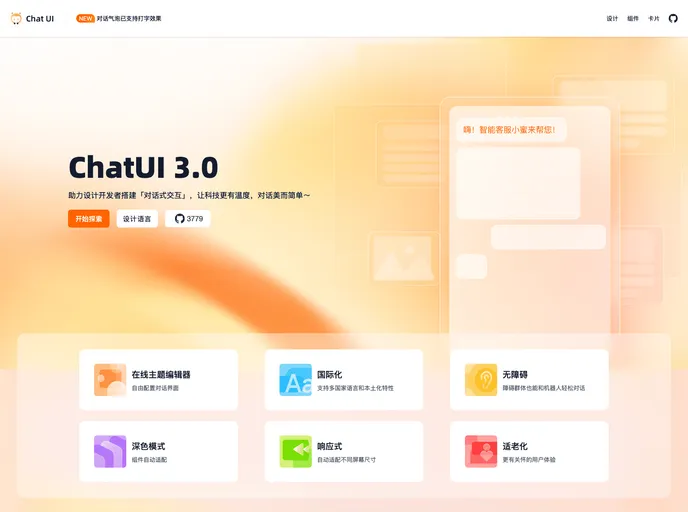


The UI design language and React library for Conversational UI
Overview
The latest version of the LICENSENPM has garnered attention for its robust features aimed at enhancing chatbot interactions. Built with a focus on user experience and adaptability, this product stands out by utilizing TypeScript for predictable coding, making it reliable for developers. The responsive design ensures that users have a seamless experience regardless of the device they are using, whether it’s a smartphone, tablet, or desktop.
The inclusion of accessibility support underscores its commitment to inclusivity, allowing users of all abilities to engage with chat features comfortably. With powerful theming options and internationalization support, it’s poised to meet diverse user needs across multiple languages.
Features
- Best Practices: Incorporates effective strategies for chatbot interaction based on extensive experience with Alime Chatbot.
- TypeScript: Developed using TypeScript, ensuring predictable static types and reliable coding practices.
- Responsive Design: Automatically adjusts to different device screens for a consistent user experience.
- Accessibility Support: Certified by the Accessibility Research Association, making it usable by individuals with varying abilities.
- Powerful Theming: Offers extensive customization options to tailor the appearance of the chatbot.
- Internationalization: Supports a wide range of languages, making it accessible for a global audience.
- Modern Browser Support: Compatible with various modern browsers including Chrome, Firefox, Safari, and even Internet Explorer 11 with proper polyfills.
- React
React is a widely used JavaScript library for building user interfaces and single-page applications. It follows a component-based architecture and uses a virtual DOM to efficiently update and render UI components
- LESS
Less CSS is a dynamic stylesheet language that extends the capabilities of CSS, allowing developers to write cleaner, more modular, and reusable stylesheets with features like variables, mixins, and nested rules.
- Eslint

ESLint is a linter for JavaScript that analyzes code to detect and report on potential problems and errors, as well as enforce consistent code style and best practices, helping developers to write cleaner, more maintainable code.
- Postcss

PostCSS is a popular open-source tool that enables web developers to transform CSS styles with JavaScript plugins. It allows for efficient processing of CSS styles, from applying vendor prefixes to improving browser compatibility, ultimately resulting in cleaner, faster, and more maintainable code.
- Rollup

RollupJS is a popular and efficient JavaScript module bundler that takes the code from multiple modules and packages them into a single optimized file, minimizing the overall size of the application and improving its performance.
- Typescript

TypeScript is a superset of JavaScript, providing optional static typing, classes, interfaces, and other features that help developers write more maintainable and scalable code. TypeScript's static typing system can catch errors at compile-time, making it easier to build and maintain large applications.