
Design System




Design System project
Overview
In the ever-evolving landscape of web development, having the right tools at your disposal can significantly enhance your workflow and the quality of your output. From coding to design, understanding the essential resources available can lead to more effective and efficient development processes. Exploring tools like VS Code, Figma, and React helps to illustrate how each contributes uniquely to the ecosystem of modern web applications.
Features
-
VS CODE: A powerful IDE that provides an extensive range of extensions, making it suitable for various programming languages and frameworks. Its user-friendly interface simplifies the development process for both beginners and professionals.
-
FIGMA (Prototype - UX/UI): An intuitive design interface tool tailored for UX/UI designers, allowing for collaborative design in real-time. It streamlines the prototyping process and ensures seamless communication between designers and developers.
-
REACT: A widely-used programming language that promotes component-based architecture, making it easier to build interactive user interfaces with reusable components.
-
TYPESCRIPT: A superset of JavaScript that offers static typing, enhancing code quality and maintainability. It is especially beneficial for large-scale applications, reducing the likelihood of runtime errors.
-
TAILWIND CSS: A utility-first CSS framework that encourages the use of predefined classes to build custom designs without having to leave your HTML. It helps maintain a consistent design system and speeds up the styling process.
-
POST CSS: A tool that transforms CSS with JavaScript, allowing developers to utilize modern CSS features while ensuring compatibility across different browsers.
-
PHOSPHOR ICONS: A versatile set of graphic components offering a wide array of icons in various styles, making it easy to find the perfect icon for any project.
-
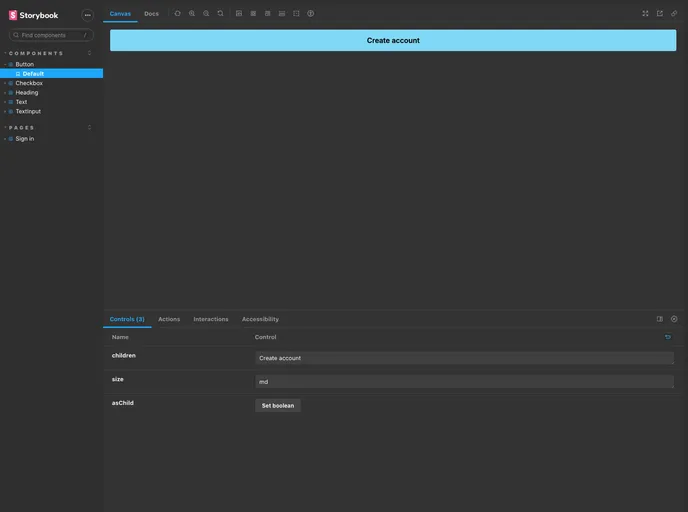
STORYBOOK: A UI isolated component building library that allows developers to visualize and test components independently, thus ensuring quality and consistency before integration into the main application.
- Figma
Figma is a cloud-based design tool for creating user interfaces, prototypes, and collaboration in real time.
- React
React is a widely used JavaScript library for building user interfaces and single-page applications. It follows a component-based architecture and uses a virtual DOM to efficiently update and render UI components
- Vite
Vite is a build tool that aims to provide a faster and leaner development experience for modern web projects
- Tailwind
Tailwind CSS is a utility-first CSS framework that provides pre-defined classes for building responsive and customizable user interfaces.
- Radix UI
Radix Primitives is a low-level UI component library with a focus on accessibility, customization and developer experience. You can use these components either as the base layer of your design system, or adopt them incrementally.
- GitHub Pages

Gridsome is a Vue.js-based static site generator that makes it easy to build fast and flexible websites and applications by leveraging modern web technologies like GraphQL, Webpack, and hot reloading
- Postcss

PostCSS is a popular open-source tool that enables web developers to transform CSS styles with JavaScript plugins. It allows for efficient processing of CSS styles, from applying vendor prefixes to improving browser compatibility, ultimately resulting in cleaner, faster, and more maintainable code.
- Storybook
Storybook is a tool for developing and testing UI components in isolation. It provides a sandbox environment where you can experiment with different props and states to see how your component responds.
- Typescript

TypeScript is a superset of JavaScript, providing optional static typing, classes, interfaces, and other features that help developers write more maintainable and scalable code. TypeScript's static typing system can catch errors at compile-time, making it easier to build and maintain large applications.