
Nestjs Hexagonal Architecture Example
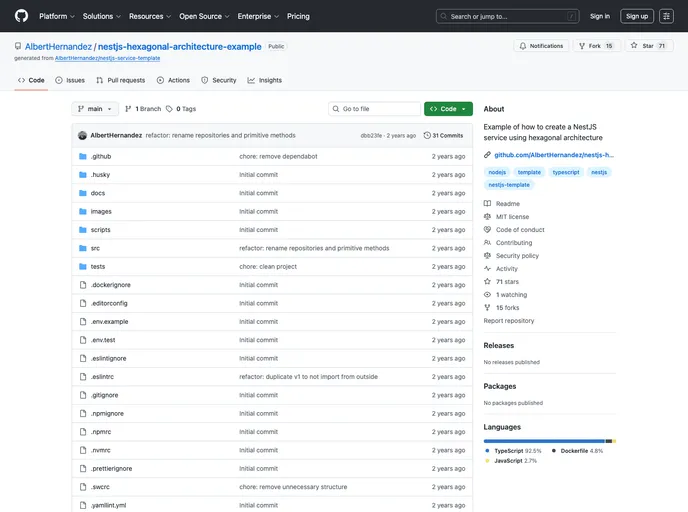

Example of how to create a NestJS service using hexagonal architecture
Overview:
The NestJS Hexagonal Architecture Example offers a clear and practical approach to implementing hexagonal architecture within a NestJS service. Hexagonal architecture, also known as the Ports and Adapters pattern, promotes a clean separation of concerns, enabling better maintainability and testability of code. This example serves as a guide for developers looking to leverage NestJS to build scalable and flexible applications.
Features:
-
Clear Structure: The example showcases a well-defined structure that separates core business logic from external dependencies, making it easier to understand and modify.
-
Scalability: By adhering to hexagonal architecture, the project allows for easy scalability as new features can be added without disrupting existing functionality.
-
Testability: The clear separation of concerns enhances the ability to write unit tests and integration tests, ensuring that each component can be tested independently.
-
Modular Design: The architecture promotes a modular design, which means that different modules can be developed and maintained separately, facilitating easier collaboration among team members.
-
Adaptability: With its ports and adapters approach, the architecture allows for easy integration of different technologies or frameworks without significant changes to the underlying business logic.
-
Improved Maintainability: The clear boundaries between different layers of the application make it easier to maintain and evolve the codebase over time.
-
Documentation and Examples: The project includes comprehensive documentation and practical examples to help developers quickly understand and implement the concepts.
This NestJS Hexagonal Architecture Example is an invaluable resource for developers aiming to enhance their skills while building resilient applications.
- Nest
A progressive Node.js framework for building efficient, scalable, and enterprise-grade server-side applications with TypeScript/JavaScript.
- Templates & Themes

A template or theme refers to a pre-designed layout or structure that provides a basic framework for building a specific type of application or website. It typically includes good design, placeholder content and functional features, allowing developers to customize and fill in the details according to their specific needs.
- Typescript

TypeScript is a superset of JavaScript, providing optional static typing, classes, interfaces, and other features that help developers write more maintainable and scalable code. TypeScript's static typing system can catch errors at compile-time, making it easier to build and maintain large applications.