
Dj Angles

Transpile HTML to the Django Template Language </>
Overview
Dj Angles is an innovative tool designed to streamline the process of converting HTML into Django Template Language. This tool aims to ease the workflow for developers working within the Django framework by simplifying the integration of frontend HTML with backend functionalities. As web development continues to evolve, tools like Dj Angles become essential for maintaining efficiency and reducing the likelihood of errors during the coding process.
Features
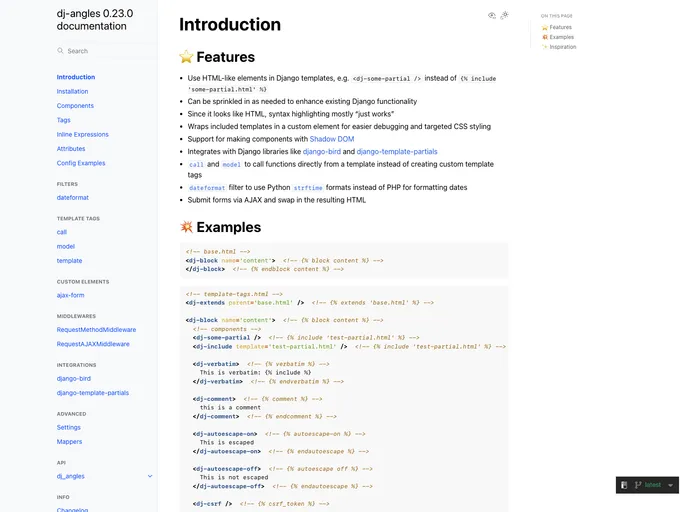
- Seamless Conversion: Dj Angles effortlessly transforms static HTML files into functional Django templates, saving users valuable development time.
- Error Reduction: By automating the conversion process, it minimizes human error often associated with manual coding, ensuring cleaner and more reliable templates.
- User-Friendly Interface: With an intuitive design, even those new to Django can navigate the tool with ease, making it accessible for developers of all skill levels.
- Customizable Output: Users can tweak output settings to cater to specific project requirements, allowing for a tailored experience that meets individual needs.
- Built-in Testing: The tool comes equipped with testing features that help developers verify the accuracy of their templates before deployment, reducing the likelihood of bugs in production.
- Documentation and Support: Dj Angles offers comprehensive documentation and support, making troubleshooting and learning straightforward for users.
- Integration Options: It supports various integration options with existing projects, making it a versatile addition to any developer’s toolkit.
- Django
Django is a high-level Python web framework that encourages rapid development and clean, pragmatic design. It follows the model-view-controller (MVC) architectural pattern, providing an extensive set of built-in tools and conventions to streamline the creation of robust and scalable web applications.
- Web Components

Web components provide a way to create reusable, encapsulated UI components using standard web technologies such as HTML, CSS, and JavaScript. They allow developers to create complex UI components that can be easily shared across multiple projects and frameworks. Web components are built using four main specifications: Custom Elements, Shadow DOM, HTML Templates, and ES Modules.