
Almo
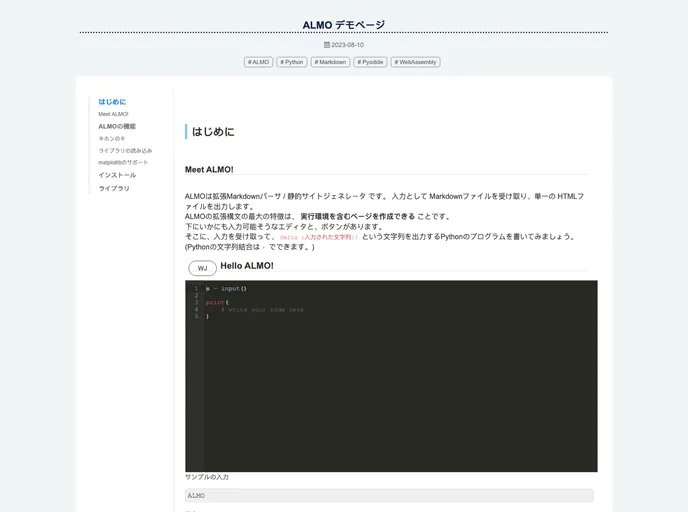
[ WIP] ALMOは拡張Markdownパーサ・静的サイトジェネレータです。WebAssemblyを使ってブラウザ上で完結する実行環境を提供し、サーバを必要としないサンプルコードの実行環境やジャッジシステムを提供するページの構築を可能にします。
Overview
ALMO is an innovative Markdown parser and static site generator built with C++. It stands out by utilizing WebAssembly to create HTML files that come with an execution and judging environment. Targeted primarily at developers, it promises a flexible platform for generating and executing scientific and programming content from Markdown articles. However, it’s important to note that ALMO is still in the development phase, meaning users may encounter critical bugs and regular breaking changes.
This tool shines in its ability to convert Markdown syntax into website-ready HTML, making it easy for developers to create rich content that includes executable code snippets. With its focus on programming and data analysis, ALMO opens the door for easy execution of Python code right within the articles, making it a great asset for educators, students, and developers alike.
Features
- Executable Code Blocks: Write code snippets that can be executed seamlessly within your articles using Python, enhancing interactivity and engagement.
- Integration with Python Libraries: Utilize powerful libraries like numpy and matplotlib for data analysis and visualizations directly in your Markdown content.
- Automatic Judging System: Automatically sets up a judging system for competitive programming scenarios, streamlining the evaluation process with sample input and output files.
- Customizable Output Options: Control your output filenames, themes, and CSS files directly from the command line, providing flexibility to suit your needs.
- Built for Developers: Make use of a command-line interface tailored for technical users, with various options that enhance control over your environment.
- Multiple Installation Methods: Easily install ALMO through Homebrew, Docker, or Nix, catering to different user preferences and environments.
- Interactive Plotting: Generate interactive plots using matplotlib within your Markdown, providing a visual representation of your data with minimal effort.
- Future Enhancements Planned: The project is set to evolve with additional user-friendly interfaces in future versions, underscoring a commitment to continuous improvement.