Jellyfin.org
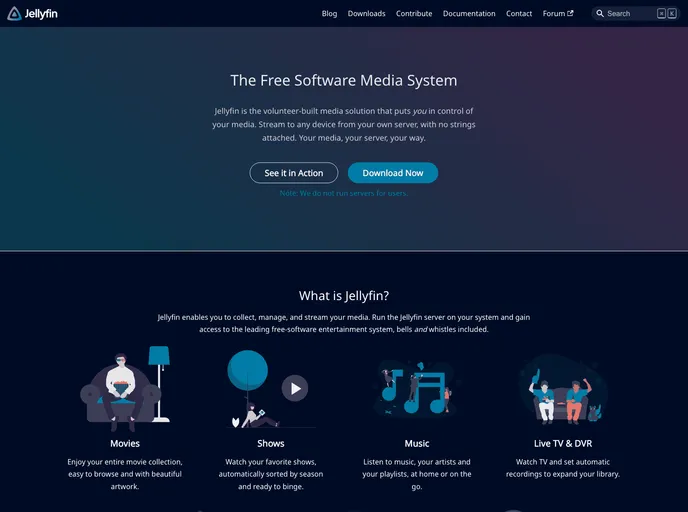



Jellyfin Project website, blog, and user documentation
Overview
The next generation of the official Jellyfin website promises a refreshing and streamlined experience for users and developers alike. By consolidating all content under a single codebase, Jellyfin aims to enhance the usability of their platform and improve the overall documentation accessibility. This evolution is built upon the principles of efficiency and modern web design, intending to provide users with a cohesive hub for all their Jellyfin-related needs.
Developed using Docusaurus 2, this new approach merges extensive resources, including elements from the existing blog and documentation content. The initiative not only modernizes the web presence but also makes it simpler for contributors to keep the information relevant and up to date for the community.
Features
- Unified Codebase: Combines all website resources from jellyfin.org, simplifying maintenance and updates.
- Improved Documentation Experience: Enhanced structure and navigation aimed at providing users easy access to support and information.
- Modern Development Tools: Built using Docusaurus 2, which offers a contemporary static site generator for a smoother development process.
- Live Local Development: Start a local server to view changes in real-time without needing to refresh, streamlining the development workflow.
- Static Content Generation: Easily generate static files ready for deployment on any web hosting service, ensuring efficient content delivery.
- Integration with Existing Resources: Incorporates existing blog and documentation content for a seamless transition and enriched user experience.
- Docusaurus
Docusaurus is an open-source static site generator designed for creating documentation websites. Developed by Facebook, it simplifies the process of building, deploying, and maintaining documentation with its React-based framework and pre-configured setup for documentation projects.
- React
React is a widely used JavaScript library for building user interfaces and single-page applications. It follows a component-based architecture and uses a virtual DOM to efficiently update and render UI components
- SCSS
SCSS is a preprocessor scripting language that extends the capabilities of CSS by adding features such as variables, nesting, and mixins. It allows developers to write more efficient and maintainable CSS code, and helps to streamline the development process by reducing repetition and increasing reusability.
- Eslint

ESLint is a linter for JavaScript that analyzes code to detect and report on potential problems and errors, as well as enforce consistent code style and best practices, helping developers to write cleaner, more maintainable code.
- Typescript

TypeScript is a superset of JavaScript, providing optional static typing, classes, interfaces, and other features that help developers write more maintainable and scalable code. TypeScript's static typing system can catch errors at compile-time, making it easier to build and maintain large applications.